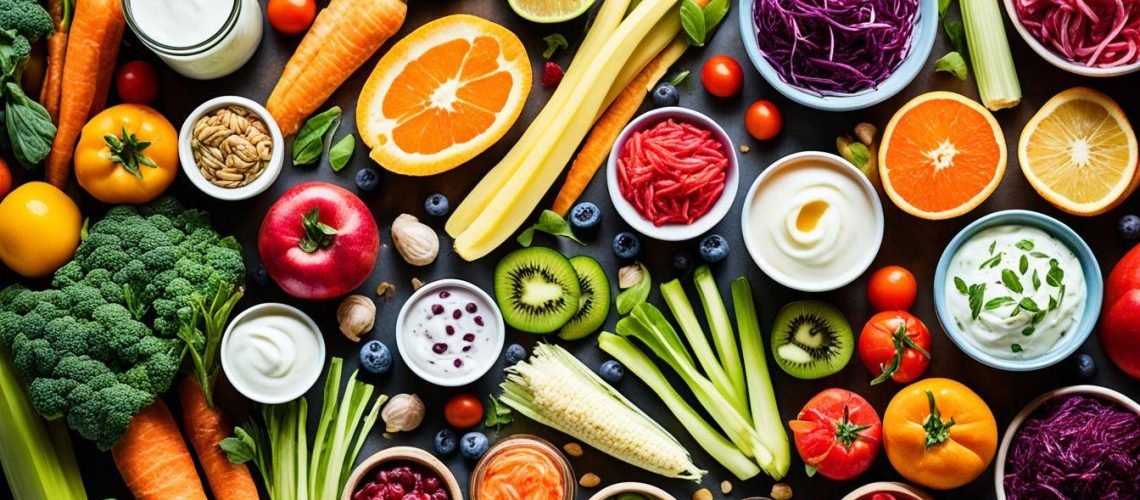
Imagine your breakfast could change your wellbeing. Isn’t that interesting? What you eat in the morning can deeply affect your health, especially your gut. Foods rich in beneficial bacteria can help with digestion and balance your body’s functions. These microorganisms are natural allies, supported by history and science1. Foods like yogurt or sauerkraut are not just tasty; they’re steps to better health23.
Table of Contents
ToggleKey Takeaways
- Discover why gut health probiotics are not just a trend, but a historical and scientifically supported part of human diets1.
- Understand how fermented foods for gut health play a vital role in improving digestion with probiotics3.
- Learn about the diverse range of health benefits associated with probiotic-rich foods like yogurt, sauerkraut, and tempeh2.
- Find out how to identify and integrate probiotic foods into your diet to foster better health and immunity1.
- Explore the unique contributions of various fermented foods in supporting gut-brain connection and mental well-being3.
The Importance of Probiotics in Gut Health
Probiotics are key for anyone wanting to boost their digestive health and overall well-being. These beneficial bacteria help keep your gut balanced, which is good for your immune system and mental health. But why is eating foods rich in probiotics so important for gut health?
Defining Probiotics and Their Role in Digestive Wellness
Probiotics are live microorganisms that are good for you when you eat them. They help improve or restore the good bacteria in your gut4. A balanced gut is important for digestion, absorbing nutrients, and making vitamins. Eating foods like yogurt, kefir, and sauerkraut can boost your gut health and help you get the most out of your food4. You can find out more about sauerkraut and its benefits in fighting Candida here.
Linkage Between Probiotics and Immune System Strength
Eating foods with probiotics can make your immune system stronger. Probiotics help fight off bad bacteria by taking up nutrients and space4. They also help make natural antibodies and support immune cells like IgA-producing cells and T lymphocytes5. Adding probiotic foods to your diet is a great way to keep your gut and immune system healthy.
Understanding the Gut-Brain Axis: Probiotics and Mental Health
The gut-brain axis connects your gut and brain. Research shows that probiotics can affect your brain and might help with mental health issues5. By eating foods with probiotics, you’re not just helping your gut. You’re also supporting your mental health, showing how important gut health is for your overall well-being.
Adding different probiotic-rich foods to your meals can improve your gut health, immune system, and mental focus. Exploring the health benefits of these microorganisms shows how a balanced diet with probiotics can support your health fully.
Identifying Probiotic Foods in Your Diet
Starting to improve your gut health means knowing which foods are full of probiotics. It also means learning how to spot them when you’re shopping. This guide will help you find gut-friendly foods and understand probiotic food labels.
Reading Labels: Finding Live Cultures and Fermented Foods
When you’re at the store, it’s important to know how to read labels for probiotics. Look for “Live Active Cultures” or specific bacteria like Bifidus, Streptococcus Thermophilus, and Lactobacillus Acidophilus. These signs mean the food has probiotics. Choose foods that are lightly processed or not pasteurized after fermentation to keep the probiotics alive6.
Adding a variety of fermented foods to your meals is also good for your gut. Try yogurt, kefir, sauerkraut, and kimchi to get different types of bacteria. This helps make your gut microbiome stronger6. Try to include these foods often in your meals.
Navigating Grocery Aisles for Probiotic-Rich Options
When shopping, go for whole foods that are close to their natural state. Learn about the best choices, like sour cream, cottage cheese, aged cheese, buttermilk, and acidophilus milk. These foods are full of good bacteria and also give you important nutrients6.
For better gut health, think about eating foods with probiotics and prebiotics together. Prebiotics feed the good bacteria in your gut. This combo is key for a healthy gut and a strong microbiome6.
For more info on the best probiotic foods and their benefits, check out this guide on top probiotic foods. It can help you make a diet that’s good for your gut.
Yogurt: A Versatile Carrier of Probiotic Cultures
Probiotic yogurt is known for its creamy taste and health perks. It’s great for people with lactose intolerance. The good bacteria in it, like lactic acid bacteria and bifidobacteria, break down lactose. This makes it easier to digest78. These bacteria also add probiotics, which are key for gastrointestinal health and boosting the immune system7.
Eating probiotic yogurt has many health benefits, like better bone health. Regular eating can increase bone density, which is good as you get older7. It also helps with weight control and lowers the risk of diseases like diabetes and heart disease7.
- Enhancement of Diet Quality: Yogurt consumption is associated with better overall diet quality7.
- Bone Health: Increased intake correlates with greater bone mineral density and improved physical function in older adults7.
- Gastrointestinal Well-being: Probiotics in yogurt can help manage and prevent issues like antibiotic-associated diarrhea by maintaining a healthy gut flora7.
To get the most bone and gastrointestinal health benefits, pick the right probiotic yogurt. Look for ‘live’ or ‘active cultures’ on the label. Be careful with added sugars, as they can lessen the yogurt’s health benefits. Adding probiotic yogurt to your diet is a smart way to improve your health, whether you have lactose intolerance or not.
The effects of probiotics, like Bifidobacterium in yogurt, depend on how well they work. This is affected by storage and how the yogurt is made8. Keep these things in mind to choose the best probiotic yogurt. This way, you support your digestive health and overall well-being.
The Benefits of Kefir: A Tangy Probiotic Powerhouse
Kefir is a probiotic milk drink that’s great for your health. It’s easy on the stomach and perfect for those who can’t handle dairy well. This makes it a top choice for people who usually avoid dairy because of discomfort.
Kefir vs. Yogurt: What Sets Them Apart?
Kefir and yogurt are both made from milk that’s been cultured. But they’re not the same when it comes to how they’re made or their probiotic levels. Kefir uses kefir grains to ferment the milk. These grains have lots of good bacteria and yeasts.
This gives kefir a unique taste and helps your gut, digestion, nutrient absorption, and immune system9. The fermentation also breaks down lactose, making it safe for those with lactose intolerance9.
Choosing the Best Kefir for Gut Health Benefits
When picking a probiotic drink like kefir, go for ones with less sugar. Drinking kefir every day can lead to a healthier gut, better gut function, and less inflammation10. You can make kefir at home with kefir grains for a fresh supply10.
You can enjoy kefir on its own or add it to smoothies, salad dressings, and even baked goods as a buttermilk substitute. Using kefir in your cooking makes your meals more nutritious and fun. It’s a tasty way to get more probiotics into your diet.
Fermented Foods for Gut Health: Sauerkraut and Kimchi
Fermented foods for gut health bring many benefits, like better digestion and a stronger immune system. Sauerkraut is more than a condiment; it’s a key player in gut health. It’s full of live cultures that help your digestion11. This fermented cabbage is crucial for a healthy gut and keeps the gut microbiome stable for a long time12.
Kimchi, a spicy Korean dish, is also great for health. It’s a big Kimchi vitamin source, packed with vitamins K, riboflavin, and iron11. Kimchi helps with weight control and can lower blood lipid and sugar levels, which is good for your heart1213.
- Choose Unpasteurized Versions: For the best gut health, pick sauerkraut that hasn’t been pasteurized. It has live bacteria that are good for you.
- Vary Your Kimchi: Try different seasonings and veggies in Kimchi to keep it interesting and your gut healthy.
Adding sauerkraut and Kimchi to your meals can really boost your gut health. They also offer many other health benefits, like better eye health and antioxidant protection. These fermented foods make your diet richer and more diverse.
Miso and Tempeh: Probiotic Staples from Japan
Japanese cuisine is full of probiotic foods that are great for a healthy gut. Miso and tempeh, made from fermented soybeans, are tasty and full of health benefits. They are perfect for anyone wanting to boost their gut health with natural, probiotic foods.
Comparing Miso’s and Tempeh’s Probiotic Profiles
Miso is more than just for soups and marinades. It helps gut health with its probiotics14. You can find white and red miso, each with its own flavor and fermentation level. They can match different dishes well15.
Tempeh is a great high protein option for vegetarians and is full of probiotics for gut health14. It can be made from various legumes, like lentils, chickpeas, or black beans, offering choices for everyone15.
Incorporating Traditional Japanese Ferments into Modern Cuisine
Adding miso and tempeh to your meals brings a rich umami flavor and probiotics for a healthy gut. Begin by using miso in dressings or as a glaze for grilled meats. Tempeh is a great meat substitute in dishes like tacos or burgers, thanks to its texture and flavor. These foods not only taste great but also offer nutrients that help gut health and overall well-being16.
Using these probiotic foods in your diet is a step towards enjoying global flavors and improving your digestive health. Why not try tempeh tacos or a warm miso soup? These foods bring probiotic benefits to your table.
Finding Probiotics in Unlikely Places: Cheese and Buttermilk
Looking for a probiotic-rich diet? Don’t just think of yogurt and kefir. Live cultures in cheese and traditional buttermilk can also boost your gut health. Not every cheese has live cultures, so check the labels. Look for semi-hard cheeses like Gouda and some blue cheeses for these probiotics.
Also, traditional buttermilk is a hidden gem for probiotics. It’s the leftover from making butter. This buttermilk is full of Lactococcus lactis and Streptococcus thermophilus bacteria. These bacteria help with digestion and boost your immune system17. Adding these to your meals can be a smart move for your health.
- Live cultures in cheese: Check the packaging for details on fermentation. This ensures you get live bacteria that help with digestion and boost calcium levels.
- Traditional buttermilk: Choose the naturally fermented kind. It’s a great way to get more good bacteria without artificial additives.
It’s important to balance your diet with these dairy items. They can make a big difference in a probiotic-rich diet. Adding fermented dairy like traditional buttermilk and cheese not only helps your gut but also gives you important nutrients like calcium and proteins.
For more info on probiotics in dairy and their health perks, check out this in-depth study.
Probiotic Beverages: Kombucha and Beyond
Exploring probiotic beverages opens up a world of options that can boost your gut health. Kombucha is a standout, known for its unique taste and gut health benefits. It’s a tasty drink that also packs a punch with beneficial bacteria and yeast for a healthy gut18.
Discovering the Probiotic Qualities of Kombucha
Kombucha comes from fermenting tea, often black or green, with sugar and SCOBY (Symbiotic Colony of Bacteria and Yeast). This fermentation creates a rich source of probiotics, essential for gut health. Health-Ade Kombucha, with one billion CFUs per bottle, comes in flavors like Guava Dragon Fruit. It’s both healthy and tasty19.
Exploring Other Fermented Beverages with Probiotic Benefits
There’s more to probiotic drinks than kombucha. Kefir, a fermented milk drink, is packed with over 50 probiotic species18. Lifeway Organic Plain Whole Milk Kefir has 12 live cultures, offering up to 30 billion CFUs. For those avoiding dairy, Lifeway Organic Oat Milk is a vegan option with 10 probiotic cultures per serving19.
De La Calle Tepache offers a unique taste with its fermented pineapple flavor, available in exotic tastes like Watermelon Jalapeño. It’s a refreshing choice that also brings probiotic benefits19. Culture Pop Sparkling Probiotic Soda mixes soda fizz with probiotic health benefits. It comes in flavors like watermelon and rosemary lime, offering a vegan-friendly, shelf-stable option full of live probiotics19.
Adding these drinks to your diet is a fun way to get more gut health probiotics. Each drink has its own set of flavors and health perks, making it easy to find something you like. Whether it’s the complex taste of kombucha or the creamy feel of kefir, these drinks support your digestive health and offer a great drinking experience.
Enhancing Gut Health with Probiotic-Rich Foods
Adding probiotic-rich foods to your meals is a great way to boost gut health. These foods include fermented dairy and special vegetables, each offering big probiotic benefits in the diet. Let’s look at some top picks to keep your gut balanced and healthy.
Yogurt is a top choice for getting probiotics in your diet. It’s tasty and has live cultures that help good bacteria grow in your gut20. Kefir, another fermented dairy, has even more probiotics than yogurt. It can lower inflammation and help your heart health21.
Fermented veggies are great for your gut too. Sauerkraut and Kimchi are tasty and full of health perks like fighting cancer and boosting your immune system20. For more variety, try lacto-fermented pickles like escabeche and giardiniera.
- Kimchi’s fermentation helps with weight loss
- Miso soup, from fermented soybeans, adds probiotics to your meals
- Pickles in health food aisles are a good choice for probiotics20
Beverages can also be a good source of probiotics. Kombucha, a fermented tea, helps with weight control and lowers the risk of high cholesterol and diabetes21. Try tepache and plant-based kefirs for more probiotic options.
Certain cheeses like Swiss, Gouda, and cheddar are also probiotic-rich. They have good bacteria if not heated after aging. Adding these to your meals is a fun way to get probiotics20.
Adding a variety of probiotic foods to your diet greatly helps your digestive health and overall well-being. From sauerkraut and kefir to kombucha and special cheeses, each food has its own benefits. They all work together to keep your gut microbiome healthy.
Probiotic Foods for a Healthy Gut: Incorporating Into Your Meal Plan
Starting with yogurt is a great way to boost your gut health. Yogurt is made by fermenting milk with probiotics like Lactobacillus bulgaricus and Streptococcus thermophilus22. Choose yogurts with active cultures, low sugar, and from grass-fed animals22. Adding it to your breakfast or snack helps with digestion and boosts your overall health, including your heart and mood23.
Adding kefir and fermented vegetables to your diet is also a good idea. Kefir, like yogurt but with different probiotics, supports bone health and reduces inflammation22. It’s a great addition to your daily routine for a balanced gut. Fermented veggies like sauerkraut or kimchi add probiotics and important vitamins and minerals to your meals22. Sauerkraut is full of fiber, vitamins C and K, and should be fresh to keep its probiotic benefits22.
For meal preppers or those on special diets, mixing in yogurt, kefir, and fermented veggies is smart. This variety not only gives you different probiotics but also helps with weight management and nutrition. Try a different probiotic food each day to keep your gut microbiome diverse and strong23.
- Learn how gut health affects your and add miso to your meals. This paste is great in soups or marinades and adds good bacteria to your gut22.
- Add kimchi to your meals, a spicy cabbage and radish dish full of Lactobacillus kimchii. It’s good for your heart and immune system22.
By adding these probiotic foods to your meals, you help make your digestive system healthier. A strong gut microbiome supports your overall well-being23.
Conclusion
Research shows that a diet rich in probiotics is key to better digestion and overall health. Exploring foods like yogurt, kefir, sauerkraut, kimchi, miso, and tempeh helps support your gut health. These foods, along with prebiotics, boost your gut bacteria, making probiotics even more effective24.
Atopic dermatitis affects many children and adults worldwide. Including probiotics during pregnancy and after can help manage it25. However, not all probiotics prevent eczema, so it’s important to choose the right one for your health needs.
Choosing the right probiotic foods and supplements is crucial. Look for products with CFUs that are valid until the end of their shelf life25. Your digestive health affects many conditions, including diabetes, obesity, and mental health issues like anxiety and depression24. Adding probiotic-rich foods to your diet could be a game-changer for your health. For more info on probiotics and their benefits, check out this study2524.
FAQ
What are the benefits of consuming probiotic foods for gut health?
How do probiotics contribute to immune system strength?
Can probiotics affect mental health?
What should I look for on food labels to ensure I’m choosing probiotic-rich foods?
Are there specific benefits of yogurt as a probiotic food?
How do kefir and yogurt differ, and which is better for gut health?
What are the nutritional benefits of fermented foods like sauerkraut and kimchi?
Can plant-based eaters benefit from probiotics found in miso and tempeh?
Are cheese and buttermilk good sources of probiotics?
How can I incorporate a diverse range of probiotic foods into my meal plan?
Source Links
- Add These 23 Probiotic Foods (and Drinks) to Your Diet for a Happier, Healthier Gut
- 11 Probiotic Foods That Are Super Healthy
- Top 15 probiotic foods to support gut health
- What Are Probiotics & What Do They Do?
- 8 Health Benefits of Probiotics
- Food as Medicine: Probiotic Foods
- Beneficial Effects of Yoghurts and Probiotic Fermented Milks and Their Functional Food Potential
- Bifidobacterium species viability in dairy-based probiotic foods: challenges and innovative approaches for accurate viability determination and monitoring of probiotic functionality
- Probiotic Powerhouse for Fermented Goodness — The Kefir Co – Proudly NZ Made Young Coconut Kefir
- Kefir for Gut Health: Benefits of This Probiotic Powerhouse
- 8 Fermented Foods You Should Be Eating For Good Gut Health
- 7 Must-Eat Fermented Foods for a Healthy Gut
- 8 Fermented Foods and Drinks You Should Try, from Kefir to Kimchi
- 5 Dairy-Free Probiotic Foods to Revamp Your Gut Health
- The Benefits of Fermented Soy Products: Miso, Tempeh, and Natto
- Unlocking the power of fermented foods for gut health
- Eat These Probiotic-Rich Foods For A Healthier Gut And More Energy
- Here Are the 13 Best Probiotic Foods for Gut Health – GoodRx
- The 6 Probiotic Drinks a Dietitian Says Will Have a Very Real (and Very Positive) Impact on Your Digestive System
- Want a Healthier Gut? 12 Probiotic Foods to Add to Your Diet
- 12 Foods to Improve Your Gut Health Overnight
- : The Andrew Weil Center for Integrative Medicine
- 7-Day Meal Plan for a Healthy Gut, Created by a Dietitian: 1,200 Calories
- Keeping a Healthy Gut : USDA ARS
- Office of Dietary Supplements – Probiotics