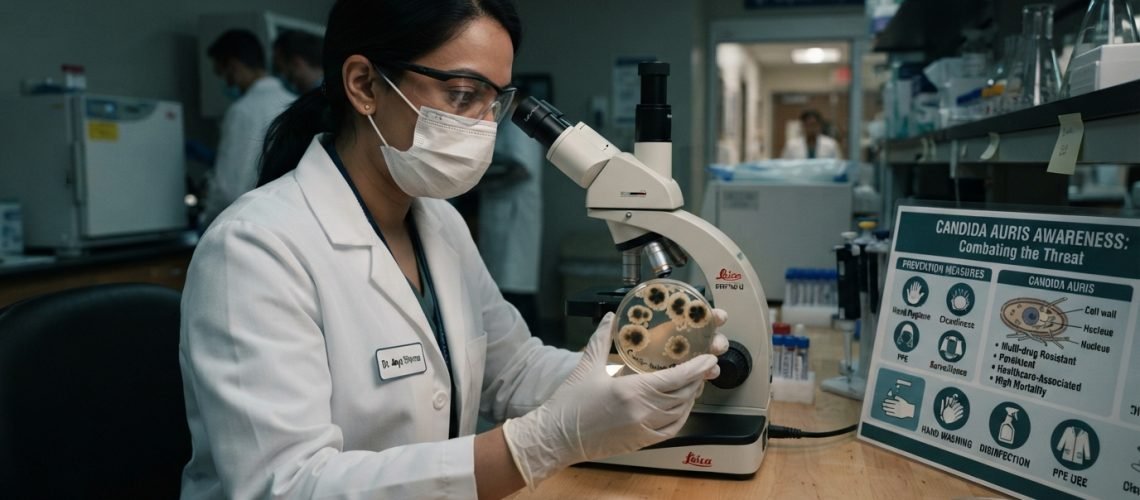
Candida auris is a drug-resistant type of yeast that poses a significant health risk, particularly to patients in healthcare settings. First identified in the United States in 2013, this organism has now been reported in over 30 countries. Its emergence highlights the need for increased awareness and vigilance.
In January 2022, Wisconsin recorded its first case of C. auris, which became a reportable disease by July of the same year. New York State had previously detected its first infection through public health surveillance in 2016, revealing a retrospective case from 2013.
While healthy individuals generally do not become ill from this organism, those receiving care in hospitals or nursing homes are at higher risk. This article will provide practical guidance on understanding transmission, risk factors, symptoms, screening, prevention, and treatment based on CDC information updated as of September 28, 2026.
Key Takeaways
- Candida auris is a drug-resistant yeast affecting vulnerable patients.
- It has been identified in over 30 countries since its discovery in 2013.
- Healthy individuals are typically not at risk, but healthcare settings are a concern.
- Wisconsin’s first case in 2022 emphasizes the need for public health awareness.
- This article offers guidance on prevention and treatment based on CDC updates.
Table of Contents
ToggleWhat Is Candida auris?
C. auris, a type of yeast, has emerged as a notable concern in health care settings. This organism can live on the body and cause infections that range from mild skin issues to severe bloodstream illnesses. Its ability to thrive in healthcare environments makes it particularly dangerous for patients.
Many strains of C. auris are resistant to at least one type of antifungal medication. In fact, some strains resist all three main classes of antifungal drugs. This resistance complicates treatment and highlights the importance of monitoring this yeast in hospitals and nursing homes.
Healthcare facilities are vigilant about C. auris because it spreads easily among sick patients. The severity of an infection can vary based on the body site affected and the patient’s overall health. This variability makes it essential for health professionals to be aware of potential risks and to implement effective disease control measures.
How Candida auris Spreads in Health Care Facilities
C. auris is a resilient organism that can linger on surfaces for extended periods. In health care facilities, it can easily spread through contact with contaminated objects. Common items include:
- Bedrails
- Doorknobs
- Blood-pressure cuffs
- Medical equipment
This organism can survive on surfaces for several weeks, which complicates efforts to eliminate it. In addition to contaminated surfaces, people can carry C. auris on their skin or other body sites without showing any symptoms. This state is known as colonization.
Colonized patients can spread C. auris for as long as the organism remains on or in their body. It’s important to understand that even if someone never develops an obvious infection, they can still pose a risk to others.
To learn more about the symptoms of C. auris, check out this resource.
Who Is at Risk for Candida auris?
Patients with serious health issues face a heightened risk of severe infections. Those with weakened immune systems or prolonged stays in healthcare facilities are particularly vulnerable. This group includes individuals with chronic illnesses, such as diabetes or cancer, who may struggle to fight off infections.
Invasive medical devices can also increase the risk of infection. Devices like breathing tubes, feeding tubes, and central venous catheters create pathways for the organism to enter the body. Furthermore, previous treatments with antibiotics or antifungal medications may alter a patient’s vulnerability, complicating future treatment decisions.
It’s important to note that healthy individuals, including healthcare providers and family members, generally do not carry this organism or become ill from it. Awareness of these risk factors can help in prevention and early detection.
| Risk Factor | Description |
|---|---|
| Serious Medical Conditions | Patients with chronic illnesses or weakened immune systems |
| Long Healthcare Stays | Extended time in hospitals or nursing homes increases exposure |
| Invasive Devices | Devices like tubes and catheters can introduce infections |
| Previous Treatments | Antibiotic or antifungal treatments may increase risk |
Signs of Candida auris and How It Is Detected
Understanding the signs of C. auris is crucial for early detection and treatment. Symptoms can vary widely depending on the infection site. Common areas affected include the bloodstream, wounds, and ears. Fever or chills may be present, but these symptoms can mimic those of typical bacterial infections.
When it comes to identifying this organism, laboratory testing is essential. Symptoms alone cannot reliably pinpoint C. auris infections. Healthcare providers often collect skin swabs to screen for colonization, especially in patients who do not exhibit any obvious symptoms.
As of September 18, 2026, New York State reported 3,381 clinical cases and 4,460 screening cases. Among these, 588 individuals appeared in both clinical and screening counts. This data highlights the ongoing surveillance and the importance of disease control prevention in healthcare facilities.
How to Help Prevent and Treat Candida auris
Preventing the spread of infections in healthcare settings is crucial for patient safety. Careful hand hygiene is essential. You can use alcohol-based hand rubs or wash your hands with soap and water. This simple step significantly reduces the risk of transmission.
Healthcare personnel also play a vital role. They often wear gowns and gloves while providing care. Facilities ensure thorough cleaning and disinfection of surfaces and equipment to maintain a safe environment.
Before receiving care, always inform your healthcare providers about any previous C. auris infections or screening results. This information helps them tailor the best treatment plan for you.
Most infections respond well to echinocandins, a class of antifungal medications. However, some strains resist all three main classes of antifungal drugs. It’s important to note that antibiotics do not work against C. auris, which complicates treatment options.
Conclusion
Although Candida auris mainly affects people with serious illness, invasive devices, or long hospital stays, simple steps can help limit its spread. Wash your hands, clean shared surfaces, and share relevant health information with your providers. These habits support infection prevention in hospitals, nursing homes, and other healthcare settings.
Finding C. auris on a person’s body does not always mean they have an active infection. Still, tell your care team about any past test results so facilities can take proper precautions during future visits. Visitors can also follow staff guidance to protect patients.
Use current public health guidance when making testing or treatment decisions. The CDC’s September 28, 2026 update and ongoing surveillance data support informed disease control and prevention. Clear communication and up-to-date information make a real difference.