Candida glabrata is a type of yeast that can live harmlessly on mucosal surfaces. However, it poses serious risks to vulnerable patients. As invasive diseases increase, concerns about transmission in healthcare settings have also risen. Additionally, this organism is showing increasing resistance to various antifungal agents, making it a significant concern in modern medicine.
Understanding the differences between C. glabrata, C. albicans, C. tropicalis, and C. parapsilosis is essential. A pivotal review by Fidel, Vazquez, and Sobel in 1999 highlights these distinctions. The 2024 systematic review further evaluated clinical and microbiological data from 2011 to 2021, providing insights into the current landscape of fungal infections.
This article aims to serve as a practical guide. You will learn about symptoms, risk factors, diagnosis, susceptibility testing, treatment options, prevention strategies, and when to seek medical care. By being informed, you can better navigate the complexities surrounding this fungal pathogen.
Key Takeaways
- Candida glabrata can be harmless but may cause severe infections in at-risk individuals.
- There is a growing concern about the resistance of this yeast to antifungal treatments.
- Understanding its differences from other Candida species is crucial for effective treatment.
- The article will cover essential information on symptoms and risk factors.
- Recent studies provide valuable insights into managing infections caused by this yeast.
Table of Contents
ToggleWhat Is Candida glabrata?
Discover what makes C. glabrata unique among yeasts. This nondimorphic yeast primarily exists in the blastoconidial form, meaning it doesn’t switch to true hyphae like some other species do. Previously known as Torulopsis glabrata, its classification reflects earlier practices before the genus was updated.
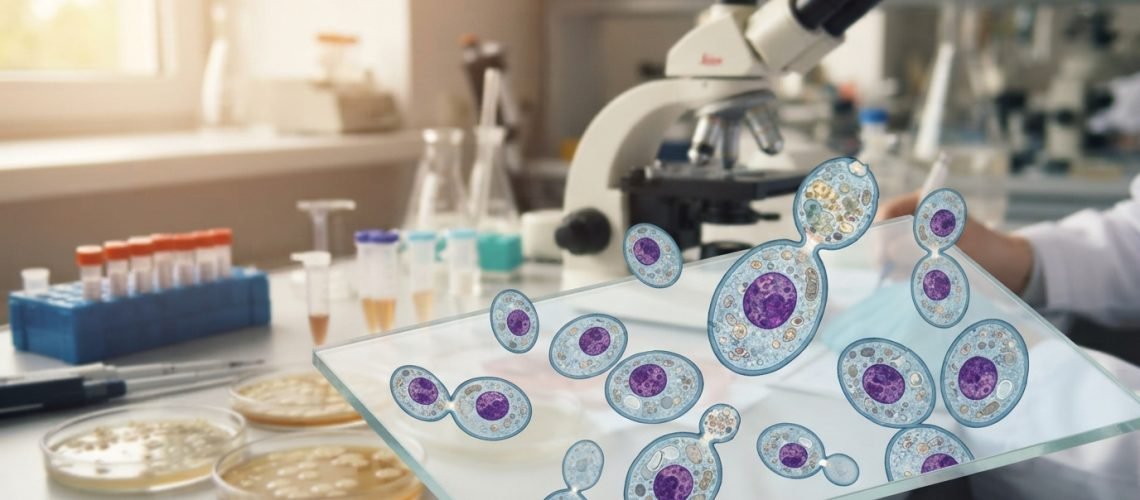
C. glabrata produces small blastoconidia, measuring 1-4 μm. In contrast, C. albicans has larger blastoconidia, typically 4-6 μm. Another distinguishing feature is its haploid genome, which sets it apart from the diploid genome found in C. albicans.
Interestingly, this yeast can colonize your body without causing disease. When your mucosal barriers and immune defenses are intact, it often remains harmless. Understanding these aspects is crucial for recognizing when it might become problematic.
How Candida glabrata Differs From Other Candida Species
Exploring the distinctions among various Candida species reveals crucial insights. The most notable comparison is with C. albicans. This species is known for producing hyphae and pseudohyphae, while C. glabrata remains in its yeast form. This difference in morphology impacts their adhesion and ability to invade tissues.
Despite the absence of hyphae, C. glabrata can still cause severe infections, especially in critically ill patients. This highlights that its lack of hyphal form does not make it harmless.
When we look at other species like C. tropicalis and C. parapsilosis, we see that they also play significant roles in candidemia cases. C. parapsilosis is particularly relevant in device-associated diseases, emphasizing the need for accurate species identification to guide treatment decisions.
| Species | Morphology | Common Infections | Antifungal Susceptibility |
|---|---|---|---|
| C. albicans | Hyphae and pseudohyphae | Oral thrush, systemic infections | Generally susceptible |
| C. glabrata | Yeast form only | Bloodstream infections | Increased resistance |
| C. tropicalis | Yeast form | Systemic infections | Variable susceptibility |
| C. parapsilosis | Yeast form | Device-associated infections | Generally susceptible |
Where Candida glabrata Lives and How It Spreads
The environments where this yeast thrives are often surprising. You might find it in your own oral, gastrointestinal, or vaginal microbiome. This yeast can colonize these areas without causing harm, but it can lead to infections under certain conditions.
Research indicates that prolonged hospitalization and prior use of antimicrobials significantly increase the risk of new acquisitions. In fact, patients who developed new infections spent an average of 18.8 days in the hospital, compared to just 7.6 days for those who did not.
In healthcare settings, the spread of this yeast can occur through contaminated surfaces or close contact with colonized patients. Temporary carriage on healthcare workers’ hands also plays a role in transmission.
Molecular typing is crucial for determining if isolates are from the same strain, especially since about 75% of patients carry the same strain over time. Additionally, mixed colonization is common, with approximately 71% of positive patients having more than one species isolated.
Candida glabrata Symptoms by Infection Site
Recognizing the symptoms associated with this yeast can help you identify potential infections early. This organism can lead to various infections, including oral, vaginal, urinary, and systemic candidiasis.
Oral symptoms may include soreness, burning sensations, altered taste, or even removable plaques. However, remember that these symptoms alone are not diagnostic.
When it comes to vaginal infections, you might experience itching, irritation, soreness, or abnormal discharge. Interestingly, *C. glabrata* can produce less classic symptoms compared to other species.
If the urinary tract is involved, symptoms may manifest as painful urination, urgency, frequency, or abnormal findings in urine tests. These signs are important to note.
In cases of bloodstream infections, symptoms can include fever, chills, low blood pressure, confusion, or worsening illness, often without a distinctive rash. This highlights the importance of symptom location, as the same yeast can represent colonization at one site and an invasive infection at another.
When Candida glabrata Causes an Invasive Infection
Invasive infections occur when yeast breaches the body’s natural defenses, entering sterile areas like the bloodstream. This can happen through surgery, trauma, or the placement of catheters. These actions create pathways for the yeast to move from colonized surfaces into the bloodstream.
Patients with conditions such as cancer, diabetes, or AIDS are particularly at risk. Invasive disease can progress rapidly in these individuals, leading to severe complications. The mortality rate for invasive infections caused by this yeast ranges from 40% to 60%, highlighting the urgency for professional management.
It’s important to note that a positive culture from blood indicates a serious infection, distinct from colonization found on nonsterile mucosal surfaces. This distinction is crucial for effective treatment.
Risk Factors for Candida glabrata Infection
Several health conditions and treatments can increase your vulnerability to infections caused by this yeast. Individuals with diabetes, cancer, AIDS, or those who are critically ill often have weakened defenses. This makes them more susceptible to opportunistic infections.
Broad-spectrum antibiotics can disrupt your body’s protective bacteria. This disruption creates an ecological space where the yeast can thrive. Similarly, chemotherapy and immunosuppressive treatments reduce your immune system’s ability to control colonizing organisms.
Additionally, medical devices like catheters can breach natural barriers. They provide surfaces where biofilms can develop and persist, further complicating infections. It’s important to note that having a risk factor does not guarantee infection. However, when multiple factors are present, it should prompt clinical vigilance.
How Doctors Diagnose Candida glabrata
The diagnostic process for this yeast involves several advanced techniques. Clinicians may request cultures from blood, urine, vaginal tissue, oral lesions, or other suspected infection sites. This helps them pinpoint the source of the infection accurately.
Laboratories distinguish C. glabrata using various methods. These include biochemical reactions, chromogenic colony colors, and molecular assays. For instance, on CHROMagar, C. glabrata colonies appear pink to purple, while C. albicans colonies show green to blue-green.
It’s important to note that a positive result from a nonsterile site may indicate colonization rather than an invasive disease. Blood cultures, imaging, and examining sterile-site specimens become crucial when systemic infection is suspected.
Nonspecific symptoms can delay diagnosis. Therefore, understanding the infection site and the patient’s clinical condition is essential for effective treatment.
What Candida glabrata Isolates Can Tell Your Care Team
Analyzing isolates helps your care team understand the infection’s origin and nature. An isolate is a laboratory-recovered organism, and its significance varies based on the specimen type and symptoms present. This can indicate whether the organism is simply colonizing or causing an invasive infection.
Strain typing plays a crucial role in distinguishing between persistent colonization and a newly acquired healthcare-associated strain. If the same strain is recovered repeatedly, it may suggest persistence rather than independent exposure.
Moreover, mixed cultures containing both C. glabrata and C. albicans can complicate treatment planning. Understanding these dynamics is essential for effective management. However, remember that identifying an isolate alone does not determine the severity of the disease or the best antifungal drug to use.
Antifungal Susceptibility and Resistance in Candida glabrata
Understanding the nuances of antifungal susceptibility can significantly impact treatment outcomes. The challenges of treating infections caused by this yeast are increasingly recognized in the medical community. Resistance to antifungal agents, particularly azoles like fluconazole, has become a pressing issue.
Why azole resistance, including fluconazole resistance, matters
Fluconazole may be less reliable against this yeast than against other species. This is due to its intrinsic reduced susceptibility, which can make infections harder to treat. Moreover, acquired resistance can develop after antifungal exposure, complicating treatment further.
How susceptibility testing can guide treatment
Susceptibility testing is essential. It measures whether a clinical isolate is inhibited by specific drug concentrations. The 2024 review highlighted increasing resistance to echinocandins, making this area particularly concerning.
Laboratory results must be interpreted alongside the infection site, severity, organ function, and prior treatment. Amphotericin and flucytosine remained mostly active, offering some hope in treatment strategies.
Candida glabrata Treatment Options
When it comes to treating infections caused by this yeast, various options are available. Your clinician may consider several antifungal drugs, including echinocandins, amphotericin formulations, flucytosine, or selected azoles. The choice of medication largely depends on the specific infection and individual patient factors.
Treatment strategies can vary significantly for different types of infections. For instance, the approach for vaginal, oral, urinary, abdominal, and bloodstream infections may differ. This highlights the importance of a tailored treatment plan.
Susceptibility test results can also influence therapy decisions. They can support a change from initial empiric therapy to a narrower or more effective regimen. It’s essential to review factors such as kidney function, liver function, drug interactions, pregnancy status, and immune status before proceeding.
Lastly, it’s crucial to remember that patients should not self-treat suspected invasive infections or alter antifungal therapy without medical guidance. Doing so can lead to complications and treatment failures.
| Treatment Options | Indications | Considerations |
|---|---|---|
| Echinocandins | Invasive candidiasis | Resistance is increasing |
| Amphotericin B | Severe infections | Generally effective |
| Flucytosine | Combination therapy | Monitor for toxicity |
| Selected Azoles | Less severe infections | Resistance possible |
Why Candida glabrata Infections Can Be Difficult to Treat
Treating infections caused by this yeast can present significant challenges. Increased resistance to multiple antifungal medications limits your options. Both azole and emerging echinocandin resistance narrow treatment choices. This makes it crucial to explore effective alternatives carefully.
Biofilms formed by this yeast can also complicate treatment. These biofilm-associated cells behave differently from free-living cells. They may be less exposed to active drug concentrations, making eradication more difficult.
When infections involve catheters, implanted materials, or multiple organs, treatment becomes even more complicated. Delayed diagnosis can allow the disease to progress before an effective antifungal regimen begins. The 2024 systematic review identified treatability, resistance, mortality, and disability as interconnected clinical concerns.
| Challenge | Description |
|---|---|
| Azole Resistance | Decreased effectiveness of azole antifungals. |
| Biofilm Formation | Increased drug tolerance and persistence. |
| Delayed Diagnosis | Progression of infection before treatment. |
| Multi-organ Involvement | Complicated treatment scenarios. |
Virulence Factors: How Candida glabrata Persists
The mechanisms behind this yeast’s virulence are crucial for effective treatment. Adhesion is a key factor in how it establishes itself in the body. The EPA-family adhesins help the yeast attach to epithelial surfaces, allowing for persistent colonization.
Biofilms are organized microbial communities that can form on catheters and implanted materials. These biofilms are comparatively sparse and dominated by yeast cells, unlike the denser pseudohyphal biofilms associated with other species.
Additionally, this yeast has developed strategies to survive immune defenses. It can endure macrophage engulfment and resist neutrophil killing. Mechanisms such as iron acquisition, cell-wall remodeling, and the production of hydrolytic enzymes support its survival.
As one researcher noted, “The ability to evade immune responses is vital for the persistence of this organism.” Understanding these factors can guide effective treatment strategies.
| Virulence Mechanism | Description |
|---|---|
| Adhesion | Utilizes EPA-family adhesins for attachment to surfaces. |
| Biofilm Formation | Forms sparse biofilms on medical devices. |
| Immune Evasion | Survives macrophage engulfment and resists neutrophil killing. |
| Iron Acquisition | Regulates iron to support growth and survival. |
How to Help Prevent Candida glabrata Infection
Preventing infections caused by this yeast requires a proactive approach. While no specific prevention strategy has been established beyond standard infection control measures, several practices can significantly reduce the risk of transmission.
Infection-control practices in health care settings
In healthcare environments, maintaining strict hygiene is essential. Here are some key practices to consider:
- Hand hygiene: Encourage careful handwashing and the use of sanitizers, as studies have identified possible transmission through surface contact and hand carriage.
- Device management: Clinicians should insert, maintain, and remove catheters and other devices only when medically necessary to minimize infection risk.
Why antibiotics and antifungals should be used as prescribed
Proper use of medications is crucial in preventing infections:
- Antibiotic stewardship: Prior antimicrobial exposure was strongly associated with new acquisitions in a cited hospital study.
- Adherence to prescriptions: Patients should take prescribed antifungals exactly as directed, avoiding early discontinuation or saving leftover medications.
Ultimately, prevention focuses on reducing unnecessary exposure and protecting vulnerable patients rather than eliminating normal yeast colonization.
What Recent Research Says About Candida glabrata
Emerging findings reveal significant trends in the incidence of this yeast. A systematic review published by Beardsley and colleagues in Medical Mycology on June 27, 2024, highlights these trends. The review examined studies from January 2011 to February 2021, revealing that the incidence of infections is increasing overall and as a proportion of invasive yeast infections.
What the 2011-2021 systematic review found
- The review found that azole resistance was common among isolates.
- Increasing resistance to echinocandins was noted, while amphotericin and flucytosine generally retained activity.
- Of the 610 articles from PubMed and 405 from Web of Science, only 71 studies met the criteria for inclusion.
- Thirty studies had low risk of bias, while 25 showed high risk.
How to look for studies in sources such as Google Scholar
You can locate related studies by using Google Scholar. Combine search terms like “Candida glabrata,” “candidemia,” “resistance,” and “biofilm” for effective results. Always check the publication dates, study designs, and patient populations to ensure the findings are relevant to your interests.
When to Seek Medical Care
It’s essential to know when to seek medical help for infections linked to this yeast. Invasive infections can lead to serious complications, including bloodstream infections, which carry a mortality rate of approximately 40-60%.
High-risk groups include:
- Intensive-care patients
- Individuals with cancer
- People with diabetes
- Those receiving immunosuppressive therapy
Be alert for these symptoms that require prompt medical attention:
- Persistent fever, chills, or confusion
- Low blood pressure or rapidly worsening illness after hospitalization or surgery
- Oral, vaginal, urinary, or skin symptoms, especially with underlying conditions
Remember, treating a possible bloodstream infection is an emergency. This condition can spread to multiple organs and significantly increase mortality risks. Always inform your care team about recent treatments, such as antibiotics, antifungals, chemotherapy, or any surgeries.
Lastly, do not assume that every positive test from a nonsterile site indicates the need for systemic treatment. Clinicians must interpret results in context.
Conclusion
This yeast can live on your body without causing harm. But it may cause severe illness if your immune defenses weaken, a protective lining is damaged, or a medical device creates a path into the body. Its yeast-only form, haploid genome, small blastoconidia, and lab profile help distinguish it from C. albicans.
One test result does not tell the whole story. Your care team considers symptoms, culture results, infection site, and possible bloodstream involvement together. Resistance to azoles and rising echinocandin resistance also make species identification and drug testing important.
A 2024 review of 71 studies found growing clinical impact and substantial mortality, along with gaps in prevention and treatment evidence. If you have concerning symptoms or risk factors, seek medical care. Your clinician can choose the right tests and treatment for you.