Understanding candida dubliniensis is essential for anyone concerned about oral health. This organism was first identified as a distinct species in 1995. Since then, it has been found in various countries, including the United States and Australia. This broad range of locations highlights its significance in global health.
Most notably, this yeast is closely linked to oral candidiasis, particularly in individuals with compromised immune systems, such as those living with HIV or AIDS. While it can exist harmlessly in the body, its presence in oral cavities can lead to serious health issues.
This guide will help you distinguish between harmless colonization and candidiasis. You will also learn about the symptoms, testing, and antifungal care options available. Understanding these factors is crucial for effective management and prevention.
Key Takeaways
- Candida dubliniensis was recognized as a distinct species in 1995.
- It is found in many countries, not just Dublin.
- This yeast can exist without causing disease.
- Oral candidiasis is a significant concern, especially for those with HIV.
- The guide covers symptoms, testing, and treatment options.
Table of Contents
ToggleWhat Is Candida dubliniensis?
Let’s explore the fascinating world of a specific yeast species. Candida dubliniensis was first identified through a unique journey that began with a postmortem lung specimen in the United Kingdom in 1957. Initially misidentified as Candida stellatoidea, it was stored under the label NCPF 3108.
The name dubliniensis pays homage to Dublin, Ireland, where this organism was recognized as a separate species in 1995. This yeast primarily resides in oral cavities but has also been found in vaginal, periodontal, and bloodstream sites.
In vulnerable patients, C. dubliniensis can colonize deep periodontal pockets. Interestingly, older laboratory records often confused these isolates with C. albicans due to the limitations of early identification methods. It’s important to note that colonization is a normal microbial state, but it can sometimes lead to disease if the host’s defenses change.
How Candida dubliniensis Differs From Candida albicans
In the realm of yeast species, the distinctions between two notable types can be subtle yet significant. Both Candida dubliniensis and Candida albicans share certain traits, such as the ability to produce germ tubes and chlamydospores. This commonality can often lead to confusion in laboratory settings during identification.
However, there are key differences in their growth characteristics. C. dubliniensis thrives at temperatures of 30°C and 37°C but struggles to grow at 42°C. In contrast, many C. albicans strains flourish at this higher temperature. This variation is crucial for proper identification.
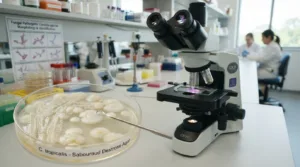
Another distinguishing factor is their appearance on CHROMagar Candida. After 48 hours at 37°C, C. dubliniensis colonies turn dark green, while C. albicans colonies appear light blue-green. Additionally, C. dubliniensis lacks beta-glucosidase activity, setting it apart from C. albicans in various DNA and ribosomal RNA analyses.
Understanding these differences is vital. Laboratories may use multiple methods to confirm species-level identification, ensuring accurate diagnosis and treatment.
Who Is More Likely to Be Affected?
Certain groups of individuals face a higher risk of infection. Understanding these populations helps in prevention and management efforts. Research indicates that those with weakened immune systems are particularly vulnerable.
HIV and other conditions that weaken immune defenses
Studies show that C. dubliniensis was found in 27% of HIV-infected individuals and 32% of AIDS patients with symptomatic oral candidiasis. Even among those without clinical symptoms, it was present in 19% of HIV-infected individuals and 25% of AIDS patients.
Other factors linked with Candida overgrowth
Other conditions can also increase the risk of infection. These include diabetes, cystic fibrosis, and patients undergoing cancer therapy or transplantation. Additionally, individuals on immunosuppressive medications are at a heightened risk.
| Condition | Percentage Affected | Population |
|---|---|---|
| HIV with oral candidiasis | 27% | HIV-infected individuals |
| AIDS with oral candidiasis | 32% | AIDS patients |
| HIV without candidiasis | 19% | HIV-infected individuals |
| AIDS without candidiasis | 25% | AIDS patients |
| Denture-associated candidiasis | 14.6% | HIV-negative patients |
Recognizing Candida dubliniensis Symptoms
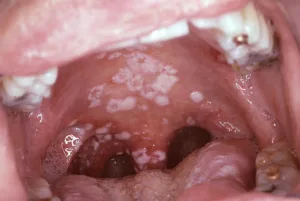
Recognizing the signs of a specific yeast infection is crucial for effective treatment. Symptoms can include redness, soreness, and burning sensations in the mouth. You may also notice white plaques that can appear over shallow ulcers. These plaques might bleed when removed, indicating a possible infection.
Erythematous candidiasis is notably the most common manifestation in certain populations, particularly among HIV-infected individuals in Ireland. While these symptoms suggest an infection, they cannot definitively identify the specific species involved.
It’s important to be aware that fever, low blood pressure, or confusion can signal a more serious condition, such as disseminated candidiasis. This type of infection can cause generalized illness, even when specific signs of a yeast infection are absent.
Remember, symptoms can overlap with other infections or conditions. Therefore, laboratory testing is essential for accurate diagnosis and appropriate care.
Oral Candidiasis and Your Mouth
Oral health is essential, and understanding the signs of oral candidiasis can help you maintain it. This condition often presents with noticeable symptoms, including removable white plaques in the mouth. You may also experience an erythematous base, soreness, and discomfort while eating.
Other signs can include an altered taste sensation, which may affect your appetite. Recognizing these symptoms early is vital for effective treatment.
Interestingly, the presence of C. dubliniensis in your mouth doesn’t always indicate an infection. In fact, studies show that 3% of 150 healthy HIV-negative Irish individuals carried this organism without any clinical signs. Additionally, C. dubliniensis was found in 14.6% of HIV-negative patients with denture-associated oral candidiasis.
Clinicians assess various factors when diagnosing oral candidiasis. They consider the appearance of lesions, the quantity of the organism, symptoms, and the patient’s immune status. Even when other species are detected, C. albicans remains the most common cause of oral candidiasis.
Can Candida dubliniensis Cause Infections Beyond the Mouth?
You may wonder if this yeast can lead to infections beyond the mouth. While it is most commonly associated with oral health, there are instances where it has been reported in other areas.
C. dubliniensis has been linked to vulvovaginal candidiasis, although such cases are less frequent compared to oral infections. In fact, this species accounted for approximately 2% of candidemia cases in studies from the UK and the US.
In contrast, C. albicans was responsible for about 65% of candidemia cases. This highlights the relatively lower incidence of infections caused by C. dubliniensis in the bloodstream.
Invasive infections can occur, particularly in patients who are neutropenic or have undergone bone marrow or solid-organ transplantation. These individuals face a higher risk due to weakened immune defenses.
Symptoms such as fever, chills, and low blood pressure may arise, but it’s important to note that disseminated disease often lacks specific clinical patterns. Therefore, a bloodstream isolate should prompt immediate professional evaluation, even if the organism is less common.
| Infection Type | Percentage of Cases | Common Pathogen |
|---|---|---|
| Candidemia | 2% | C. dubliniensis |
| Candidemia | 65% | C. albicans |
| Vulvovaginal Candidiasis | Reported Cases | C. dubliniensis |
How Colonization Can Lead to Candidiasis
The journey from harmless colonization to infection can be surprising. Candida typically lives on human mucosal surfaces without causing harm. This yeast can be acquired from your own body, known as an endogenous source.
However, certain factors can trigger a shift. For instance, if you undergo antimicrobial therapy, it may suppress competing bacteria. This can lead to an overgrowth of C. dubliniensis.
Additionally, when the mucosal integrity is compromised, the risk of developing candidiasis increases. A lack of functional neutrophils also heightens this risk, especially in patients with weakened immune systems.
C. dubliniensis cells have the ability to adhere to host proteins, such as mucin. This adhesion helps explain how colonization can persist. Understanding these dynamics is crucial for managing potential infections.
When to Contact a Health Care Professional
Knowing when to seek medical help is vital for your health. If you experience persistent mouth pain, difficulty swallowing, or recurrent thrush, it’s essential to reach out to a healthcare professional. This is especially important if you have conditions like HIV or cancer.
Urgent care is necessary if you encounter symptoms such as fever, chills, confusion, low blood pressure, or breathing difficulties. These signs can indicate a serious condition, as disseminated candidiasis can be life-threatening.
Research shows that the attributable mortality rates for disseminated candidiasis range from 35% to 50%. This highlights the need for prompt medical attention rather than attempting home treatment.
Furthermore, if you’ve recently undergone transplantation, chemotherapy, or have been on prolonged broad-spectrum antibiotics, you should seek evaluation. It’s also crucial to note that at least 50% of patients with disseminated cases may have repeatedly negative blood cultures, so persistent symptoms deserve clinical assessment.
| Symptoms | Action Required |
|---|---|
| Persistent mouth pain | Contact a healthcare professional |
| Fever and chills | Seek urgent care |
| Confusion or low blood pressure | Immediate medical attention needed |
| Recent chemotherapy or transplantation | Evaluation necessary |
| Repeatedly negative blood cultures | Clinical assessment required |
How Candida dubliniensis Is Diagnosed
Diagnosing a yeast infection requires careful evaluation. Your clinician will start by examining any visible lesions and reviewing your immune conditions. Based on your symptoms, they may collect samples from various sites, including oral, vaginal, skin, blood, or tissue.
It’s essential to understand that a positive culture from superficial areas doesn’t automatically indicate an infection. This is because colonization is common. Therefore, a positive result must be interpreted alongside:
- The type of lesions present
- The quantity of the organism
- Your symptoms
- Any underlying health factors
On the other hand, recovery of yeast from blood, cerebrospinal fluid, or deep-tissue samples carries much greater diagnostic weight. This strongly supports the presence of invasive disease.
Interestingly, at least 50% of patients with disseminated candidiasis may have repeatedly negative blood cultures. Thus, a negative result does not always exclude invasive candidiasis. Species-level identification is crucial, as it helps distinguish C. dubliniensis from C. albicans, guiding treatment decisions effectively.
How Labs Identify Candida dubliniensis
Laboratories employ various techniques to identify specific yeast species. The identification process begins with culture and phenotypic analysis. Here, clinicians observe colony appearance, including the presence of germ tubes and chlamydospores. They also consider temperature tolerance and carbohydrate reactions.
One effective medium used is CHROMagar Candida. This medium helps differentiate between species. After 48 hours at 37°C, colonies of C. dubliniensis appear dark green, while C. albicans colonies are light blue-green. Understanding these color changes is crucial for accurate identification.
Additionally, DNA-based tests like PCR and real-time PCR provide definitive identification. These methods target species-specific sequences, offering a more precise analysis than morphology alone. Techniques such as DNA fingerprinting and ribosomal RNA sequencing further demonstrate that C. dubliniensis is genetically distinct from C. albicans.
Treatment Options for Candida dubliniensis
When it comes to treating yeast infections, understanding the options available is crucial. Your clinician may choose from a wide range of antifungal drugs based on the infection’s site and severity. Common antifungal classes include azoles, amphotericin B, and echinocandins.
Topical antifungals or systemic azoles can effectively treat many mucosal or cutaneous infections. For instance, fluconazole is a commonly discussed azole, while echinocandins like caspofungin, micafungin, and anidulafungin may be preferred in certain cases.
It’s important to note that local oral or vaginal infections may require a different treatment approach compared to bloodstream infections or deep-organ diseases. Factors such as kidney function, liver function, pregnancy, and immune status can significantly influence drug selection.
Some pooled analyses have suggested that echinocandins may outperform fluconazole in invasive candidiasis, highlighting the need for individualized treatment plans.
| Antifungal Class | Examples | Common Uses |
|---|---|---|
| Azoles | Fluconazole | Mucosal infections |
| Amphotericin B | Amphotericin B | Severe infections |
| Echinocandins | Caspofungin, Micafungin, Anidulafungin | Invasive candidiasis |
Fluconazole Resistance and Other Antifungal Concerns
The dynamics of antifungal susceptibility can greatly impact patient care. Most tested C. dubliniensis isolates remain susceptible to commonly used antifungal agents, including azoles, polyenes, and echinocandins. However, this susceptibility is not guaranteed.
Fluconazole deserves special attention. Studies show that susceptible isolates can develop resistant derivatives after exposure in vitro. The overexpression of the MDR1 efflux pump is a primary mechanism of fluconazole resistance, while CDR1 contributes less consistently.
It’s important to avoid using leftover antifungal medication. Such drugs may target the wrong species, incorrect dosage, or inappropriate infection site, which can delay proper care. If you experience recurrent disease or treatment failure, your clinician may request susceptibility testing to guide your treatment plan.
What to Expect During Care and Follow-Up
When undergoing treatment, knowing what to expect can ease your mind. Your clinician will closely monitor your response to therapy. This includes checking for improvements in symptoms such as mouth lesions, pain, fever, or swallowing difficulties.
In some cases, your clinician may need to repeat cultures or request susceptibility testing. This is especially true if symptoms return after previous treatment with antifungal drugs.
It’s important to note that no single identification method is completely accurate for every isolate. Therefore, labs often use multiple techniques to ensure precise diagnosis.
If you experience persistent bloodstream infections, new fever, or organ-related symptoms, further testing may be necessary. This could include imaging studies or repeat blood cultures. Although C. dubliniensis candidemia is rare compared to C. albicans, careful monitoring is essential when blood tests are positive.
| Follow-Up Action | Purpose |
|---|---|
| Check symptom improvement | Assess treatment effectiveness |
| Repeat cultures | Identify potential recurrence |
| Susceptibility testing | Guide treatment decisions |
| Imaging studies | Evaluate persistent symptoms |
| Consultation with specialists | Obtain expert opinions |
Practical Care Tips While You’re Being Evaluated
Taking care of your health during evaluation is essential. This involves following your prescribed treatment plan closely. Make sure to take your medication exactly as directed. Stopping early can lead to fluconazole-susceptible isolates developing resistance after exposure in vitro.
It’s also important to share relevant health conditions with your clinician. Inform them about any history of HIV, diabetes, pregnancy, cancer treatment, or recent use of antibiotics. These factors can significantly influence your treatment plan.
Here are some key points to remember:
- Provide a complete list of prescriptions, supplements, corticosteroids, and any used antifungal medication.
- Do not share medication or rely on an old prescription. The responsible species and susceptibility pattern may differ.
- Keep follow-up appointments if symptoms persist, recur, or worsen, even when an initial oral sample showed Candida.
| Action | Importance |
|---|---|
| Follow prescribed medication | Prevents resistance development |
| Share health conditions | Guides treatment decisions |
| List all medications | Avoids treatment complications |
| No sharing of prescriptions | Ensures correct treatment |
| Attend follow-up appointments | Monitors treatment effectiveness |
What Current Evidence Says About Prevalence and Risk
Recent studies shed light on the prevalence and risk factors associated with specific yeast infections. Current evidence indicates that oral carriage and oropharyngeal disease are reported far more often than invasive infections. For instance, data from Ireland shows that C. dubliniensis occurred in 19% of HIV-infected individuals and 25% of AIDS patients without clinical oral candidiasis.
Interestingly, healthy HIV-negative individuals show much lower carriage rates. In one study, only 3% of 150 participants had C. dubliniensis without clinical signs. This highlights the differences in risk among various populations.
Moreover, C. dubliniensis accounted for approximately 2% of candidemia cases, while C. albicans represented around 65%. This disparity underscores the need for accurate identification. Such precision is crucial as it impacts epidemiology, treatment selection, recurrence, and fluconazole resistance among different candida species.
Conclusion
Knowing what a test result means can help you take the right next step. This yeast species often affects the mouth, especially in patients with weakened immune defenses. Yet a positive mouth sample alone does not confirm disease; healthy people may carry the organism without symptoms.
Symptoms can resemble those caused by Candida albicans. Lab growth patterns, colony color, and DNA tests help tell the species apart. Bloodstream infection is rare, but it needs prompt medical care. Cited research links this species to about 2% of candidemia cases.
Your treatment should match the infection site, health needs, and lab results. Don’t use leftover medicine. Contact a health professional if symptoms persist or return, or if you develop fever or signs of severe illness. For patients at higher risk, early care can make a real difference.
FAQ
What are the common symptoms of oral candidiasis?
Symptoms often include white patches in the mouth, soreness, and difficulty swallowing. You might also notice a cottony feeling in your mouth.
How can I tell if I have an infection caused by this yeast?
While symptoms can provide clues, a proper diagnosis requires lab tests. It’s best to consult a healthcare professional for accurate identification.
Who is at risk for developing infections?
Individuals with weakened immune systems, such as those with HIV or diabetes, are more likely to experience infections. Other factors like antibiotic use can also increase risk.
Can this yeast cause infections outside the mouth?
Yes, it can lead to vaginal infections and even bloodstream infections in some cases. If you have symptoms beyond the mouth, seek medical advice.
What treatment options are available?
Treatment usually involves antifungal medications. Your healthcare provider will choose the best option based on the infection site and your overall health.
Why is fluconazole resistance a concern?
Some strains have shown resistance to fluconazole, making treatment less effective. It’s important to follow your healthcare provider’s guidance and not use leftover medications.
How can I prevent oral candidiasis?
Maintaining good oral hygiene, managing underlying health conditions, and avoiding excessive antibiotic use can help reduce your risk of developing this infection.
What should I do if I suspect an infection?
Contact your healthcare professional for an evaluation. They can provide the necessary tests and recommend appropriate treatment.
Free: Candida Diet Starter Guide
Get our printable foods-to-eat and foods-to-avoid lists plus a simple 7-day sample meal plan. Free, and you can unsubscribe anytime.