Understanding Candida tropicalis is crucial for effective treatment. This organism can act as a harmless yeast but may also lead to serious infections, particularly in vulnerable patients. Recent studies reveal that infections caused by this species can result in mortality rates as high as 52%. This alarming statistic underscores the importance of prompt medical attention.
In this guide, you will discover the symptoms associated with infections, diagnostic testing methods, and treatment options available. You will also learn about the differences between Candida tropicalis and other species, like Candida albicans, which is often more recognized. Recognizing these differences can aid in proper identification and management of infections.
With insights from a comprehensive 2024 review involving 436 patients across 25 countries, this article aims to equip you with essential knowledge. By understanding the risks and treatment strategies, you can engage more effectively with your healthcare team.
Key Takeaways
- Infections from Candida tropicalis can be severe, with high mortality rates.
- Understanding symptoms is vital for early diagnosis.
- Different species of Candida can behave differently in the body.
- Effective treatment depends on accurate identification of the fungal pathogen.
- Engaging with your healthcare team can improve outcomes.
Table of Contents
ToggleWhat Is Candida tropicalis?
A closer look at this organism shows its potential for both harmony and harm. Candida tropicalis is a diploid yeast that can live in your body without causing any symptoms. However, under certain conditions, it can become pathogenic and lead to infections.
This yeast was first isolated in 1910 from a patient suffering from fungal bronchitis. It was initially named Oidium tropicale. The organism boasts a 14.5-megabase genome with 6,258 protein-coding genes, which contribute to its adaptability in various environments.
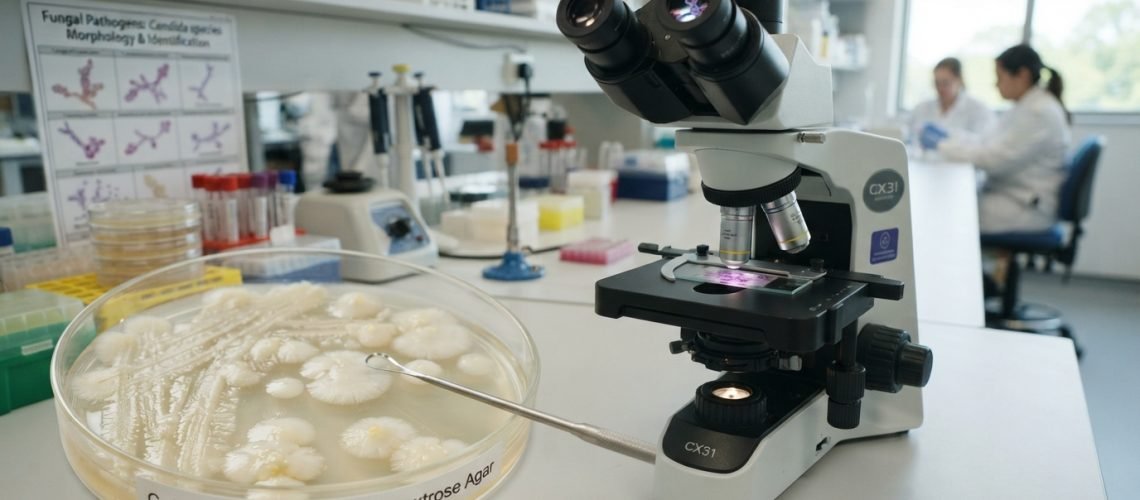
In laboratory settings, Candida tropicalis is identified by its white-to-cream colonies, budding cells, pseudohyphae, and true hyphae. Notably, it can ferment sugars like galactose, sucrose, maltose, and trehalose, which helps distinguish it from other yeasts.
| Characteristic | Details |
|---|---|
| First Isolated | 1910 from a patient with fungal bronchitis |
| Genome Size | 14.5 megabases |
| Protein-Coding Genes | 6,258 |
| Guanine-Cytosine Content | 33.1% |
| Fermentation Capabilities | Galactose, sucrose, maltose, trehalose |
How Candida tropicalis Differs From Other Candida Species
Exploring the differences among various Candida species can illuminate their unique characteristics. Candida tropicalis shares a close genetic and phenotypic relationship with Candida albicans. However, it exhibits distinct epidemiology, resistance, and virulence patterns that set it apart.
One notable feature of Candida tropicalis is its ability to produce true hyphae, a trait also found in Candida albicans and Candida dubliniensis. This capability is significant in understanding its pathogenic potential.
In Latin America and Asia, Candida tropicalis has been identified as the second or third leading cause of candidemia. This highlights the need for accurate species-level identification, which is crucial for selecting the right therapy for patients.
Additionally, comparing Candida glabrata and Candida parapsilosis reveals differences in their roles in bloodstream infections and biofilm formation. Understanding these distinctions can guide effective treatment strategies.
Where Candida tropicalis Infections Can Occur
Infections caused by Candida tropicalis can manifest in various parts of the body. These infections may be localized or systemic, depending on the site affected. Understanding these differences is crucial for recognizing symptoms and determining treatment.
Localized infections can occur in areas such as the mouth, respiratory system, urinary tract, abdomen, and genital region. For instance, oral candidiasis may cause discomfort in the mouth, while bloodstream infections, known as candidemia, can lead to fever and systemic illness.
In a French multicenter study, Candida tropicalis was found in 7% of nosocomial peritonitis isolates. Additionally, community-acquired studies reported it in about 3%-11% of fungal isolates. These findings illustrate how the rates of infection can vary based on the setting.
Symptoms of Candida tropicalis Infection
Recognizing the symptoms of an infection is essential for timely treatment. Infections caused by this organism can present in various ways, depending on whether they are localized or invasive.
Possible signs of a localized infection
Localized infections may cause several symptoms. You might experience:
- Oral discomfort: Burning sensations or altered taste.
- Visible lesions: White plaques, redness, or irritation in the mouth.
- Site-specific discomfort: Pain or irritation in the affected area.
Symptoms of invasive candidiasis and candidemia
Invasive infections can lead to more severe symptoms. These may include:
- Fever and chills: Common signs of bloodstream infections.
- Organ-specific symptoms: Discomfort related to the lungs, abdomen, or urinary tract.
- Pediatric mortality: Ranging from 26% to 40% in severe cases, highlighting the need for immediate medical evaluation.
When to Seek Medical Care
Knowing when to get medical help can be a lifesaver. If you experience persistent fever, chills, confusion, low blood pressure, or difficulty breathing, it’s time to act. These symptoms can indicate a serious infection.
A bloodstream infection can be severe, even if it initially resembles a common bacterial or viral illness. Five studies from a 2024 review reported that the 30-day mortality rates for these infections range from 32% to 52%. Delaying assessment can be dangerous.
Emergency evaluation is crucial if you have underlying conditions like leukemia, neutropenia, or if you have a central line or have recently received intensive care. Overall mortality rates reached 55%-60%, affecting 105 out of 186 patients in the same review.
- Seek urgent care: for any persistent or worsening symptoms.
- Be aware: that initial symptoms may mimic less serious illnesses.
- Act quickly: if you have risk factors that increase your chances of severe infection.
Risk Factors for Candida tropicalis Infection
Certain health conditions can significantly increase your risk of infection. Understanding these factors is crucial for prevention and timely treatment. Individuals with weakened immune systems, particularly those with neutropenia or leukemia, are especially vulnerable.
Neutropenia, leukemia, and other serious illnesses
Neutropenia and malignancies, such as leukemia, heighten the risk of severe infections. Studies indicate that leukemia is linked to an odds ratio of 4.77 for invasive infections. This means individuals with leukemia are nearly five times more likely to experience severe infections.
Hospital stays, medical devices, and weakened immunity
Extended hospital stays, the use of central venous catheters, and surgeries can also increase exposure. Broad-spectrum antibiotics, while necessary, can disrupt normal flora and create opportunities for infection.
Chronic lung disease and other factors linked to invasive infection
Chronic lung disease carries an odds ratio of 2.62, indicating a measurable connection between pulmonary illness and invasive risk. Other clinical concerns include cancer, transplantation, and immunosuppressive therapy, all of which can compromise your body’s defenses.
| Risk Factor | Odds Ratio |
|---|---|
| Leukemia | 4.77 |
| Chronic Lung Disease | 2.62 |
| Neutropenia | Varies |
| Hospitalization | Increased Risk |
| Immunosuppressive Therapy | Increased Risk |
Colonization, Infection, and How Candida Tropicalis Spreads
The presence of certain yeasts in your body doesn’t always indicate an active infection. Many adults carry oral yeast species at rates of 20% to 60%, with an average of about 40%. This is a normal part of your body’s flora.
The dorsum of the tongue is a primary oral reservoir for these yeasts. This means that even if you find yeast on a swab, it does not automatically mean you have an infection.
Factors like antibiotics, mucosal injury, immune suppression, and medical devices can shift this colonization toward disease. Understanding this shift is crucial for recognizing when an infection might occur.
It’s important to distinguish between normal body carriage and healthcare-associated transmission. Invasive spread through the bloodstream can lead to serious health issues, making awareness vital.
| Factor | Impact on Infection |
|---|---|
| Antibiotics | Can disrupt normal flora |
| Mucosal Injury | Increases risk of colonization |
| Immune Suppression | Heightens infection risk |
| Medical Devices | Facilitate invasive spread |
| Healthcare Transmission | Can lead to outbreaks |
Why Candida tropicalis Can Cause Serious Disease
The ability of certain organisms to cause serious illness is often tied to their unique characteristics. Candida tropicalis is known for its strong adhesion to various surfaces, including epithelial and endothelial cells. This ability allows it to attach to catheters and other medical devices, making infections more likely.
In fact, research by Zuza-Alves and colleagues highlights that this organism is a potent biofilm producer, often surpassing Candida albicans in studies. Biofilms can shield fungal cells from the immune system, complicating treatment and eradication efforts.
Additionally, virulence factors such as proteinases, phospholipases, and hemolysins play a role in damaging host tissues. These enzymes help the organism acquire nutrients during an infection, further enhancing its survival.
Hyphal growth and phenotypic switching allow Candida tropicalis to adapt to the changing environment within the human body. Understanding these mechanisms is crucial for developing effective treatment strategies.
| Virulence Factor | Function |
|---|---|
| Adhesion | Attaches to host cells and devices |
| Biofilm Production | Protects against immune responses |
| Proteinases | Damages host tissues |
| Phospholipases | Facilitates nutrient acquisition |
| Hyphal Growth | Enhances adaptability |
How Candida tropicalis Is Diagnosed and Identified
Identifying the specific species of yeast involved in an infection is essential for effective treatment. Various methods are used to diagnose infections, depending on the symptoms and the suspected site of infection.
Using cultures and laboratory identification methods
Blood, urine, tissue, or respiratory cultures may be collected based on your symptoms. These samples help determine the presence of candida tropicalis and other species. On Sabouraud dextrose agar, colonies typically appear white to cream-colored, smooth, and creamy.
In one study, the API ID32C system accurately identified all 21 isolates of candida tropicalis. Automated systems like BD Phoenix and Vitek2 also performed well, identifying 34 of 36 and 32 of 36 isolates, respectively. These validated systems enhance the accuracy of identification.
When molecular or other advanced testing may help
Advanced methods such as MALDI-TOF and PNA-FISH can be crucial when routine identification is uncertain. PNA-FISH results for candida tropicalis ranged from 96% to 100%, demonstrating their reliability in clinical settings.
| Method | Identification Rate |
|---|---|
| API ID32C | 100% (21/21 isolates) |
| BD Phoenix | 94% (34/36 isolates) |
| Vitek2 | 89% (32/36 isolates) |
| PNA-FISH | 96-100% |
Antifungal Susceptibility and Drug Resistance
The effectiveness of antifungal treatments can vary significantly based on the specific yeast species involved. This section will explain why your laboratory may test these organisms against various antifungal agents.
Recent findings show that resistance rates to fluconazole and other azoles, such as itraconazole and voriconazole, can reach alarming levels of 40% to 80%. These statistics highlight the need for careful selection of antifungal therapy.
Reduced susceptibility to fluconazole and other azoles
With resistance rates this high, clinicians often consider alternative treatment options. Understanding these patterns can be vital for your treatment plan.
What is known about echinocandins, amphotericin B, and flucytosine
Resistance to echinocandins remains low, typically ranging from 0% to 1%. Similarly, amphotericin B has shown no resistance, while flucytosine resistance is between 0% and 4%. These findings suggest that these medications may be more reliable choices.
Why susceptibility results can matter to your treatment plan
FKS gene mutations or adaptive stress may reduce susceptibility to echinocandins. This makes species identification and testing clinically useful, as it can guide effective treatment strategies.
| Antifungal Agent | Resistance Rate |
|---|---|
| Fluconazole | 40%-80% |
| Echinocandins | 0%-1% |
| Amphotericin B | 0% |
| Flucytosine | 0%-4% |
Treatment Options for Candida tropicalis
Treatment options for infections can vary based on several factors. Your clinician will choose the most appropriate antifungal therapy by considering the severity of the infection, the site of infection, and your immune status. Additionally, kidney function and susceptibility results play a crucial role in this decision-making process.
Echinocandins are often recommended because they show excellent activity against this yeast. Published reviews consistently highlight their effectiveness, making them a preferred choice. Other antifungal classes, such as azoles and polyenes, may also be considered based on individual circumstances.
When treating the infection, addressing the source is essential. This may involve removing or replacing infected medical devices, draining abscesses, or managing other persistent infection sites. Your medical team will review cultures, monitor fever, assess organ function, and evaluate laboratory results to ensure an effective response to therapy.
For more information on the implications of positive test results, you can visit this link.
Recovery, Follow-Up, and Prognosis
After treatment, it’s important to monitor your recovery closely. This involves keeping track of symptoms, test results, and how well the treatment is working. Regular follow-ups can help catch any issues early.
Follow-up may include:
- Repeat blood cultures to check for any remaining infection.
- Physical examinations to assess your overall health.
- Organ-function testing to ensure everything is working well.
- Medication reviews to adjust treatments as needed.
- Assessment of persistent fever to identify complications.
Your recovery timeline can vary. It depends on whether the infection was localized, in the bloodstream, associated with a device, or affecting multiple organs. The overall mortality rate from severe infections reached 55%-60%, affecting 105 out of 186 patients in recent studies.
Reported 30-day mortality rates range from 32% to 52%. Individual outcomes can differ based on age, illness severity, and how quickly treatment was initiated. In pediatric cases, mortality rates were reported between 26% and 40%, emphasizing the need for close monitoring in children.
Reducing Your Risk of Candida Infection
Implementing effective hygiene practices can help you avoid infections from various Candida species. Simple measures can make a significant difference in your health. Here are some key strategies:
- Hand hygiene: Regular handwashing can prevent the spread of yeast.
- Catheter care: Ensure proper maintenance of medical devices to reduce infection risk.
- Oral care: Maintain good oral hygiene to minimize the chance of oral infections.
- Skin care: Keep skin clean and dry to deter yeast growth.
- Glucose management: Control blood sugar levels, as high glucose can promote yeast infections.
- Antibiotic use: Use antibiotics only when necessary to limit the development of resistant strains.
Additionally, always ask if every medical device is essential. Report any signs of infection, such as redness or fever, promptly. Patients with conditions like cancer or AIDS may require tailored prevention plans during hospitalization.
By combining infection-control practices with early testing, you can enhance your defense against potential infections.
| Prevention Strategy | Importance |
|---|---|
| Hand Hygiene | Reduces transmission of yeast |
| Catheter Care | Minimizes infection risk |
| Oral Care | Prevents oral candidiasis |
| Skin Care | Deters yeast growth |
| Glucose Management | Controls yeast proliferation |
What to Discuss With Your Health Care Team
Engaging with your healthcare team is essential for navigating treatment options. The 2024 review identified several key areas that are important for both clinical practice and research. These include diagnostic testing, treatment effectiveness, resistance patterns, mortality rates, incidence, and preventability.
When you meet with your healthcare providers, consider asking the following:
- Which body site was cultured? Understand if the result indicates colonization or an active infection and how confident the lab is in identifying Candida tropicalis.
- What susceptibility testing was done? Inquire if tests included fluconazole, echinocandins, amphotericin B, and flucytosine, especially if a systemic infection is suspected.
- Is there a potential source of infection? Discuss whether a central line, urinary catheter, wound, or abscess could be sustaining the infection.
- How will treatment response be measured? Ask about the plan for monitoring your condition, including repeat cultures, fever improvement, and blood tests.
- How do my health conditions affect my risk? If you have leukemia, neutropenia, chronic lung disease, or other major illnesses, discuss how these may influence your treatment plan.
What Current Research Says About Candida tropicalis
Current findings reveal important trends in the geographical spread and resistance patterns of this yeast. Research indicates that the incidence of this organism varies significantly across regions, hospitals, and patient demographics.
In Southeast Asia and South America, it has emerged as the first or second leading Candida bloodstream pathogen. This shift highlights the need for tailored treatment strategies based on local data.
The 2024 systematic review synthesized evidence from 30 studies spanning 25 countries. It also identified critical gaps in data that need addressing.
Moreover, an Australian report noted a concerning increase in resistance rates, rising from below 2% to 16.7% over the past decade. This emphasizes the importance of ongoing surveillance to inform antifungal development and enhance regional treatment protocols.
| Region | Incidence Rank |
|---|---|
| Southeast Asia | 1st or 2nd |
| South America | 1st or 2nd |
| Australia | Increasing Resistance |
Conclusion
Some people carry Candida tropicalis without symptoms. Yet it can cause a local infection or a life-threatening bloodstream illness, especially when your immune system is weak.
Neutropenia, leukemia, chronic lung disease, hospital stays, and medical devices can raise your risk. Doctors use cultures and species identification to guide care. Extra tests, such as MALDI-TOF, PNA-FISH, sequencing, and drug-sensitivity testing, may help when needed.
Azole resistance can be high, while the 2024 review found low resistance to several other antifungal drugs. Prompt care, the right treatment, source control, and follow-up tests matter. Seek medical advice for concerning symptoms, and learn about common signs of yeast overgrowth.
Risk and resistance patterns vary by region. Ongoing research helps health teams improve care and protect patients.