White patches on your tongue, a sore or “cottony” mouth, or cracks at the corners of your lips can be unsettling. One common cause is oral thrush, a yeast infection of the mouth. It’s usually linked with babies, but adults get it too, especially after antibiotics, with a steroid inhaler, with dentures or with diabetes.
This guide explains what oral thrush in adults looks like, why it happens, how doctors confirm and treat it, and what you can do to lower the chance of it coming back. Everything here is drawn from the CDC, Mayo Clinic, Cleveland Clinic and published research, linked in the Sources list at the end.
Table of Contents
ToggleWhat is oral thrush?
Oral thrush, also called oral candidiasis or oropharyngeal candidiasis, happens when Candida yeast builds up in the mouth and throat. The most common culprit is Candida albicans (Mayo Clinic).
Having some Candida in your mouth is normal. The CDC notes that everyone has Candida on the skin and in places like the mouth, throat and vagina, and most of the time it causes no symptoms. Candidiasis is what happens when it grows out of control (CDC).
Oral thrush symptoms in adults
According to Mayo Clinic and Cleveland Clinic, common signs include:
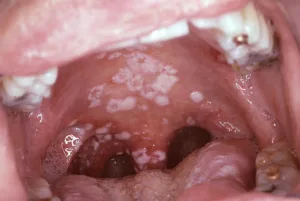
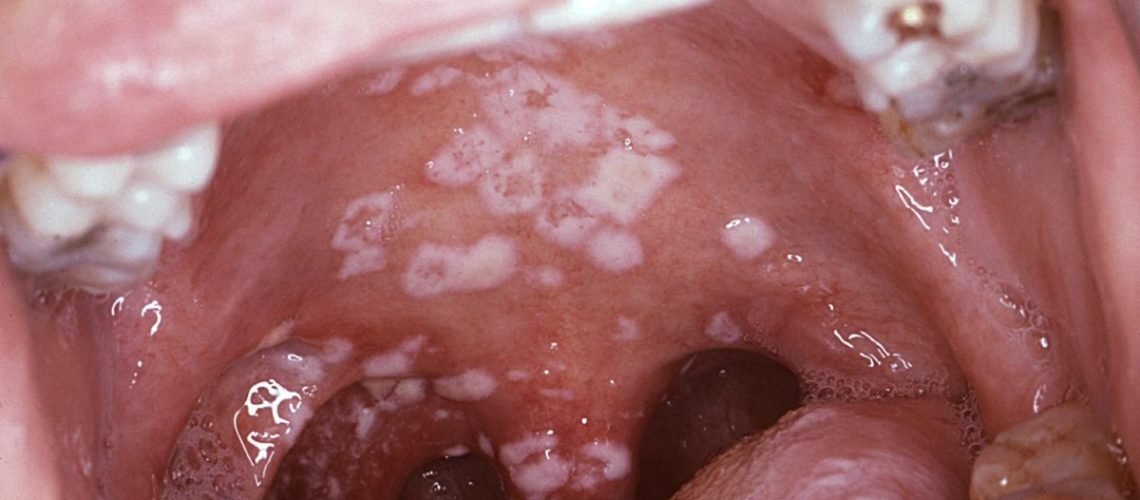
- Creamy white, slightly raised patches on the tongue or inner cheeks, sometimes also on the roof of the mouth, gums, tonsils or back of the throat. They’re often compared to cottage cheese.
- Redness, burning or soreness, sometimes enough to make eating or swallowing uncomfortable.
- Slight bleeding when the patches are rubbed or scraped, for example when brushing your teeth.
- Cracking and redness at the corners of the mouth.
- A cottony feeling in the mouth.
- Loss of taste.
- Redness, irritation and pain under dentures.
Thrush often comes on fairly suddenly (Cleveland Clinic). If you want to compare what a coated tongue can look like, see our guide to what candida on the tongue looks like. White patches can have other causes too, which is one reason it’s worth having them checked.
When thrush spreads to the esophagus
In people with weakened immune systems, for example from cancer treatment or HIV, the infection can spread down into the esophagus (the tube from your throat to your stomach). This is called Candida esophagitis. Signs include pain or difficulty swallowing and a feeling that food is getting stuck in your throat or chest (Mayo Clinic). Candida albicans is the most common cause of infectious esophagitis (StatPearls, NIH). Read more in our post on symptoms of esophageal candidiasis.
What causes oral thrush in adults?
A healthy immune system and the normal mix of microbes in your mouth usually keep Candida in check. Thrush takes hold when something tips that balance. Mayo Clinic and Cleveland Clinic list these common risk factors:
- Weakened immunity: from older age, cancer and its treatment, an organ transplant, immune-suppressing medicines, or HIV/AIDS.
- Diabetes, especially when it isn’t well controlled: saliva can contain more sugar, which helps Candida grow. Our post on candida and blood sugar covers this link in more detail.
- Medicines: antibiotics, corticosteroids such as prednisone, and inhaled corticosteroids used for asthma or COPD. Cleveland Clinic also lists birth control pills.
- Dentures: especially upper dentures, or dentures that fit poorly.
- Dry mouth (xerostomia), from medicines or medical conditions.
- Smoking, pregnancy and anemia (Cleveland Clinic).
- A vaginal yeast infection: the same fungus causes both.
Steroid inhalers and thrush
Inhaled steroids are an important treatment for asthma and COPD, and their link with thrush is well studied. In a 2022 review of 86 randomized trials with more than 51,000 people with asthma, oral or throat candidiasis was about 2.6 times as likely with long-term inhaled steroid use as without (Shang et al., 2022). A Cochrane review in COPD found a similar increase (Yang et al., 2012). The same reviews found these inhalers still bring real benefits, so don’t stop or change an inhaler on your own. Mayo Clinic’s simple tip is to rinse your mouth with water or brush your teeth after each dose, and to ask your doctor if thrush keeps coming back.
Is oral thrush contagious?
In people with healthy immune systems, it’s unusual to pass thrush on through kissing or other close contact, though people with weakened immunity are more at risk (Cleveland Clinic). Breastfeeding is an exception: a baby with thrush and a nursing parent can pass it back and forth. We cover this in more depth in Is thrush contagious?
How doctors diagnose oral thrush
A doctor or dentist can usually recognize thrush by looking in your mouth. They may take a small scraping to look at under a microscope. If thrush seems unusual for you, they may also do an exam or blood tests to look for an underlying cause, such as undiagnosed diabetes. If swallowing hurts, they may suggest an endoscopy (a thin camera tube) and sometimes a biopsy to check the esophagus (Mayo Clinic).
Treatment for oral thrush in adults
Thrush in adults is treated with antifungal medicine, which comes as lozenges, tablets, or a liquid you swish around your mouth and then swallow. Nystatin is one commonly prescribed option. If these don’t work, a doctor may prescribe a medicine that works throughout the body (Mayo Clinic; Cleveland Clinic).
Cleveland Clinic notes that treatment usually runs 10 to 14 days, and that people with healthy immune systems usually improve within one to two weeks. Finish the full course your clinician prescribes, even if your mouth feels better sooner. For an overview of the main drug options, see our guide to candida medication.
Thrush can return if the underlying cause isn’t dealt with, such as poorly cleaned dentures or inhaled steroid use (Mayo Clinic). That’s why your doctor may ask about your medicines, inhalers, dentures and blood sugar.
Self-care while you’re being treated
These steps don’t replace antifungal medicine, but Mayo Clinic and Cleveland Clinic suggest they can help with comfort and with avoiding reinfection:
- Keep up gentle oral care. Brush and floss regularly, replace your toothbrush often until the infection clears, and don’t share toothbrushes.
- Clean your dentures well. Ask your dentist how best to disinfect your type of denture.
- Try warm salt-water rinses. Mayo Clinic suggests about 1/2 teaspoon of salt in 1 cup of warm water. Swish and spit, don’t swallow.
- Ask before using mouthwashes or sprays. Cleveland Clinic notes some can upset the normal balance of microbes in your mouth.
Cleveland Clinic also mentions probiotics and yogurt with live cultures as possible ways to ease symptoms. The evidence is still limited; we’ve summarized it in probiotics for oral thrush. If you’re considering an over-the-counter product, our post on over-the-counter options for yeast infections and thrush explains what’s available and its limits.
How to lower your risk of oral thrush
- Brush at least twice a day and floss daily, or as often as your dentist recommends.
- Rinse your mouth with water or brush after using a steroid inhaler.
- Take dentures out at night, clean them daily, and make sure they fit well.
- See your dentist regularly, especially if you have diabetes or wear dentures.
- If you have diabetes, work with your care team to keep your blood sugar in range.
- Limit added sugar. Both Mayo Clinic and Cleveland Clinic list cutting back on sugar as a prevention step.
- Ask your doctor about ways to treat dry mouth.
- Avoid smoking and other tobacco use.
- Treat a vaginal yeast infection promptly.
Thrush that keeps coming back deserves a closer look with your doctor. Our guide to recurring yeast infections covers common reasons infections return.
When to see a doctor
Mayo Clinic advises seeing a medical or dental professional if you get white patches or spots inside your mouth. Thrush is uncommon in healthy teenagers and adults, so it can be a sign of an underlying condition worth checking. Get care promptly if:
- It hurts to swallow, or food feels stuck in your throat or chest.
- You have a fever along with mouth or throat symptoms.
- Symptoms don’t improve with treatment, get worse, or come back after you’ve finished antifungal medicine. Cleveland Clinic says to call your provider right away if this happens.
- You have a weakened immune system, for example from cancer treatment, an organ transplant, HIV or immune-suppressing medicines.
- You use a steroid inhaler and keep getting thrush. Ask your doctor before changing anything about how you take it.
- A baby you’re breastfeeding has white patches in the mouth or is having trouble feeding, or you have nipple pain during nursing.
Frequently asked questions
Can oral thrush go away on its own?
Cleveland Clinic says you’ll need antifungal medicine to clear up thrush, and Mayo Clinic advises adults to see a clinician because thrush is uncommon in healthy adults and may point to an underlying cause.
Can you get oral thrush from antibiotics?
Yes, it’s a recognized risk. Antibiotics can disturb the normal balance of microbes in the body, which can let Candida grow (Mayo Clinic).
Does sugar cause oral thrush?
Sugar alone doesn’t cause thrush, but Mayo Clinic and Cleveland Clinic both suggest limiting sugar, and high blood sugar from poorly controlled diabetes raises the risk because saliva can contain more sugar.
Is oral thrush a sign of a serious illness?
Often it isn’t, especially after antibiotics or with a steroid inhaler. But thrush in an otherwise healthy adult can sometimes be a sign of a condition that affects immunity or blood sugar, which is why a check-up is worthwhile.
Sources
- Centers for Disease Control and Prevention. Candidiasis Basics.
- Mayo Clinic. Oral thrush: Symptoms and causes (2024).
- Mayo Clinic. Oral thrush: Diagnosis and treatment (2024).
- Cleveland Clinic. Thrush: Symptoms, Causes and Treatment.
- Shang W, et al. The safety of long-term use of inhaled corticosteroids in patients with asthma: A systematic review and meta-analysis. Clin Immunol. 2022.
- Yang IA, et al. Inhaled corticosteroids for stable chronic obstructive pulmonary disease. Cochrane Database Syst Rev. 2012.
- Robertson KD, et al. Esophageal Candidiasis. StatPearls (NIH National Library of Medicine). 2023.
Featured image: oral candidiasis on the roof of the mouth, CDC Public Health Image Library, public domain, via Wikimedia Commons.
This article is general education, not medical advice. Talk to your doctor, dentist or another qualified clinician about any mouth symptoms, before starting or stopping any medicine, or if your symptoms are severe, new, or not improving. See our medical disclaimer.
Free: Candida Diet Starter Guide
Get our printable foods-to-eat and foods-to-avoid lists plus a simple 7-day sample meal plan. Free, and you can unsubscribe anytime.