Understanding Candida lusitaniae is essential, especially in healthcare settings. This emerging pathogen primarily affects immunocompromised patients. A recent review by Diana F. Mendoza-Reyes and colleagues highlights its growing significance. It’s crucial to recognize how this yeast can lead to serious infections.
Infections caused by this organism can arise from various factors, including immune changes and the use of broad-spectrum antibiotics. Medical devices also play a role in increasing the risk of infections. Unlike the more common Candida albicans, C. lusitaniae shows unique characteristics that warrant separate attention.
In this guide, you will learn about symptoms, culture techniques, and the importance of species-level identification. Understanding susceptibility testing and treatment options is vital for effective patient care. Despite the reported mortality from C. lusitaniae candidemia being low, severe cases still require prompt intervention.
Key Takeaways
- Candida lusitaniae is an emerging opportunistic pathogen.
- It primarily affects immunocompromised individuals.
- Infections can result from various medical factors.
- It requires distinct attention compared to Candida albicans.
- Understanding treatment options is crucial for patient outcomes.
Table of Contents
ToggleWhat Is Candida lusitaniae?
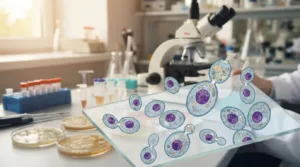
Exploring the characteristics of C. lusitaniae reveals its unique nature. This haploid, dimorphic yeast has ovoid, ellipsoidal, or elongated cells measuring approximately 2-6 × 2-10 µm. Unlike Candida albicans, it forms pseudohyphae but does not produce true hyphae. Its sexual-stage name is Clavispora lusitaniae, indicating its documented sexual cycle.
This yeast can inhabit various body sites, including the gastrointestinal, respiratory, urinary, genital, and oral tracts, without causing immediate disease. Although its clinical prevalence is low, it is part of the normal mycobiota of animals. This means that while C. lusitaniae is not often seen in clinical settings, it can still pose a risk when host immune defenses are weakened.
As the 2022 Mendoza-Reyes review highlights, “The low frequency of C. lusitaniae does not equate to a zero risk.” Understanding its opportunistic behavior is essential, especially in healthcare settings where patients may be immunocompromised. For more on treatment options, check out this link on recommended dosages of fluconazole.
How Candida lusitaniae Differs From Other Candida Species
Understanding how C. lusitaniae stands apart from other Candida species is essential. This organism belongs to the Candida CTG clade, which includes well-known species like C. albicans, C. tropicalis, C. guilliermondii, and C. parapsilosis. While C. albicans is the most frequently isolated species in clinical settings, C. lusitaniae has unique characteristics that warrant careful consideration.
One significant difference is that C. lusitaniae lacks true hyphae, while C. albicans can form invasive hyphae at around 37°C. This distinction is crucial, as it can influence treatment decisions. Moreover, C. tropicalis, C. parapsilosis, and Saccharomyces cerevisiae can create identification challenges due to overlapping morphology.
As noted in a recent study, “Laboratory confirmation is vital when treatment decisions depend on species-specific resistance patterns.” This highlights the importance of accurate identification in managing infections effectively.
What Causes Candida lusitaniae Infections?
Investigating the triggers behind infections can provide valuable insights. Normally, certain yeast species, including C. lusitaniae, colonize areas like the gastrointestinal and respiratory tracts without causing harm. However, when barriers are damaged or sterile sites are exposed, this harmless presence can shift to invasive candidiasis.
Prolonged hospitalization and the use of broad-spectrum antibiotics can disrupt normal microbial communities. This disruption often leads to an overgrowth of yeast, increasing the risk of infection. Additionally, medical devices such as central venous catheters and urinary catheters create environments where Candida species can adhere and persist.
A historical report from 1992 highlighted nosocomial acquisition of C. lusitaniae, emphasizing the need to consider healthcare-associated transmission. Understanding the context of a positive culture is crucial. It must be interpreted alongside symptoms, the site of sampling, and the patient’s overall condition.
Who Is Most at Risk?
Identifying who is most vulnerable to infections is crucial for understanding their impact. Certain groups face higher risks due to underlying health conditions and treatment factors. For instance, individuals with hematological malignancies or those undergoing chemotherapy are particularly susceptible.
In a retrospective review from MD Anderson, 12 cases of Candida lusitaniae candidemia were identified between 1988 and 1999. Alarmingly, seven of these cases were breakthrough infections during antifungal treatment.
Additionally, central lines, mechanical ventilation, and prolonged hospitalization can elevate risk levels. Interestingly, a 2023 case highlighted a 54-year-old man with no known immune issues who developed a disseminated infection. This underscores that even those without classic risk factors can be affected.
When discussing your health, it’s essential to distinguish between statistical risk and personal diagnosis. Engaging with your clinician about individual factors can help you better understand your situation.
Types of Infections Caused by Candida lusitaniae
Diving into the types of infections linked to this organism reveals important insights. Various infections can arise, including fungemia, which is a significant bloodstream infection. This type of infection can spread from an initial site, such as the urinary or abdominal areas, leading to severe complications.
Urinary tract infections, peritonitis, and meningitis are also documented presentations. It’s essential to note that not every positive culture indicates the same illness. For example, a recent case showed C. lusitaniae in both urine and pleural fluid, leading to a diagnosis of disseminated candidiasis.
Empyema, which involves infected pleural fluid, is another less common infection. In one instance, a patient produced 1,400 milliliters of fluid during initial drainage, with an additional 2,000 milliliters after thrombolysis. Understanding the context of body sites, culture results, and clinical conditions is vital for defining these infections accurately.
Symptoms: What a Candida lusitaniae Infection Can Look Like
Recognizing the signs of an infection is vital for timely intervention. Symptoms can vary depending on where the infection occurs. For instance, a bloodstream infection may lead to fever, chills, weakness, low blood pressure, or confusion. In contrast, urinary infections can cause dysuria, urgency, or flank discomfort.
Respiratory or pleural infections can produce a range of symptoms. You might experience cough, chest pain, rapid breathing, and low oxygen levels. A recent case highlighted a patient with worsening dyspnea and a respiratory rate of 30 breaths per minute. His white blood cell count reached 27.92 × 10³/mL, indicating significant systemic illness.
It’s crucial to seek prompt medical attention for severe breathing difficulty, confusion, faintness, persistent fever, low blood pressure, or rapidly worsening symptoms. Remember, recognizing these signs early can make a difference in treatment outcomes.
How Candida lusitaniae Infection Develops in Your Body
The development of an infection by this yeast in your body involves several complex interactions. This organism interacts with epithelial surfaces and immune cells, despite its lower adherence compared to other species. For instance, studies show that C. albicans adheres to buccal epithelial cells at 61.6%, while C. lusitaniae shows only 2% adherence.
Interestingly, fifteen isolates of this yeast demonstrated 37.52% cell-wall hydrophobicity, compared to 8.48% for C. albicans. This indicates that hydrophobicity alone does not predict stronger attachment. Researchers have identified putative genes related to adhesion, biofilm formation, and immune evasion through genomic analysis.
However, many of these functions remain unconfirmed. The review highlights that “the mechanisms of virulence are still under investigation.” Understanding these interactions is crucial for developing effective treatment strategies.
How Doctors Diagnose Candida lusitaniae
Diagnosing infections caused by this yeast involves careful examination and testing. Clinicians often collect cultures from various suspected sites, including blood, urine, pleural fluid, and even cerebrospinal fluid. This approach helps pinpoint the exact location of the infection.
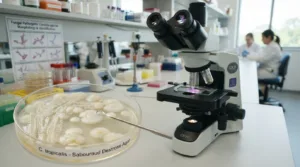
For instance, C. lusitaniae colonies can appear pink to purple on CHROMagar Candida. This distinctive coloration aids in differentiating them from similar species like C. tropicalis. In a recent case, cultures from both urine and pleural fluid confirmed the presence of C. lusitaniae.
Here are some key points about the diagnostic process:
- Clinicians collect samples from suspected infection sites to ensure accurate diagnosis.
- A positive urine culture alone doesn’t confirm invasive disease; doctors assess symptoms and imaging results.
- CHROMagar’s color helps distinguish C. lusitaniae, but labs may need further identification methods.
- Species-level identification is crucial since this yeast can be confused with others like C. parapsilosis.
- Susceptibility testing is essential for selecting the right antifungal treatment.
| Culture Source | Common Findings | Diagnostic Importance |
|---|---|---|
| Blood | Possible fungemia | Indicates systemic infection |
| Urine | May show colonization | Needs correlation with symptoms |
| Pleural Fluid | Can indicate respiratory involvement | Helps assess severity |
Why Accurate Identification Matters for Treatment</h2>
Accurate identification of this yeast is essential for effective treatment. Some isolates show resistance to common antifungal agents like amphotericin B and fluconazole. While many strains are generally susceptible, a few resistant isolates can complicate treatment plans.
When a laboratory report identifies this yeast, it prompts necessary susceptibility testing. This testing helps determine the most effective antifungal agents to use. Without this step, there’s a risk of treating a resistant isolate with an ineffective drug.
Moreover, understanding the specific species can influence source control and follow-up cultures. It also plays a vital role in assessing the infection site and consulting with infectious disease specialists. Remember, the species name alone should not dictate treatment; final decisions depend on susceptibility, organ function, and infection severity.
| Antifungal Agent | Resistance Status | Clinical Relevance |
|---|---|---|
| Amphotericin B | Some resistant isolates | Requires careful selection |
| Fluconazole | Possible resistance | Testing needed for efficacy |
| 5-Fluorocytosine | Varied resistance | Monitor closely for effectiveness |
Antifungal Resistance: What You Should Know
Resistance to antifungal medications is a growing concern in treating infections. Some isolates exhibit resistance to common agents like amphotericin B, fluconazole, and 5-fluorocytosine. Understanding this resistance is crucial for effective management.
Resistance can be intrinsic in some isolates or acquired during treatment. This makes susceptibility testing especially important for managing infections effectively. A 2022 review reported varying minimum inhibitory concentrations (MICs) for amphotericin B, ranging from 2-4 µg/mL in light-brown colonies to 256 µg/mL in white colonies.
Additionally, phenotypic switching allows the yeast to change its observable forms, leading to significant differences in antifungal susceptibility. For instance, breakthrough infections accounted for seven of the twelve candidemia cases in the MD Anderson series from 1988 to 1999. This highlights the need for careful reassessment of treatment when symptoms worsen during therapy.
- Resistance can be intrinsic or acquired, making susceptibility testing vital.
- Amphotericin B MICs can vary widely among different colony types.
- Phenotypic switching may affect antifungal susceptibility.
- Fluconazole and 5-fluorocytosine resistance has been documented.
- Breakthrough infections underline the importance of monitoring treatment effectiveness.
| Antifungal Agent | Resistance Status | Clinical Relevance |
|---|---|---|
| Amphotericin B | Some resistant isolates | Requires careful selection |
| Fluconazole | Possible resistance | Testing needed for efficacy |
| 5-Fluorocytosine | Varied resistance | Monitor closely for effectiveness |
Treatment Options for Candida lusitaniae
When it comes to treating infections, understanding the available antifungal options is key. Clinicians select treatments based on various factors, including susceptibility results, the site of infection, and the patient’s overall health.
In some cases, echinocandins like caspofungin may be preferred, especially when resistance is suspected or when kidney function is compromised. For instance, a recent patient received caspofungin due to ongoing renal impairment, requiring a 16-day course to achieve consistently negative cultures.
It’s important to note that treatment plans are tailored to individual needs. Factors such as source control—removing infected catheters or draining abscesses—also play a significant role. The duration of treatment varies based on the type of infection, as conditions like bloodstream infections and urinary tract infections do not have the same requirements.
- Clinicians choose treatment after reviewing susceptibility results, infection site, severity, prior exposure, allergies, kidney function, liver function, and drug interactions.
- Echinocandins such as caspofungin may be considered when resistance is suspected or kidney impairment makes other antifungal agents less suitable.
- In the 2023 Queens case, caspofungin was selected during renal injury and continued for 16 days until cultures consistently cleared.
- Treatment may also require source control, such as removing an infected catheter, draining pleural fluid, or managing an abdominal collection.
- Duration is individualized because bloodstream infection, urinary disease, meningitis, empyema, and disseminated candidiasis do not carry identical treatment requirements.
| Antifungal Agent | Considerations | Duration |
|---|---|---|
| Caspofungin | Used in renal impairment | 16 days in recent case |
| Liposomal Amphotericin B | Concern for renal function | Varies by patient |
| Fluconazole | Commonly used, monitor resistance | Individualized |
How Your Care Team Monitors Treatment
Your care team utilizes a range of methods to ensure effective treatment and monitor your progress. This includes tracking symptoms, cultures, and infection-specific findings to adapt care as needed.
For instance, in a recent case from 2023, clinicians employed interval cultures, daily urine cultures, imaging, and oxygen monitoring. They also assessed kidney function closely. The patient’s dialysis catheter was removed after he remained afebrile for 24 hours, and blood cultures were collected.
Here are some key aspects of monitoring during treatment:
- Clinicians track temperature, blood pressure, breathing, pain, mental status, and laboratory markers.
- Serial cultures help determine whether C. lusitaniae remains present, while imaging can show if any abnormalities are improving.
- In the 2023 case, daily urine cultures continued until three consecutive cultures were negative, providing objective evidence of clearance.
- Kidney monitoring is essential, as antifungal selection and dosing may be affected by renal injury.
- The patient transitioned from continuous renal replacement therapy to hemodialysis before recovering renal function.
Possible Complications and When to Seek Care
Being aware of the complications that can develop during an infection is crucial for effective management. Infections can lead to serious issues such as bloodstream dissemination, sepsis, and respiratory failure. You might also experience pleural infections, kidney injury, or neurologic involvement.
A recent case from 2023 illustrates the severity of these complications. The patient faced worsening respiratory failure, altered mental status, hypotension, and acute kidney injury, leading to disseminated candidiasis. He required intubation, mechanical ventilation, and vasopressor support, along with continuous renal replacement therapy and later hemodialysis.
It’s essential to seek urgent medical evaluation if you notice worsening shortness of breath, confusion, fainting, very low blood pressure, reduced urine output, or persistent fever. Complications can arise from both the infection and its treatment, so monitoring organ function is vital.
Recovery may continue even after microbiological improvement. The 2023 patient required subacute rehabilitation before returning home, and he remained stable at his six-month follow-up.
Can You Prevent Candida lusitaniae Infections?
Preventing infections caused by this yeast requires awareness and proactive measures. In healthcare settings, certain practices can significantly reduce the risk of infection. Hospital-associated colonization often occurs due to prolonged stays, the use of broad-spectrum antibiotics, and potential transmission through healthcare personnel.
One major concern is that Candida species can easily adhere to indwelling catheters, cannulas, drains, and other plastic medical surfaces. To mitigate these risks, consider the following:
- Ask your healthcare provider if every antibiotic prescribed is necessary. Prolonged use of broad-spectrum antibiotics can disrupt protective microbes, leading to overgrowth.
- Practice appropriate hand hygiene and ensure that catheter insertion techniques are followed correctly. Regular maintenance and timely removal of unnecessary lines are crucial.
- If you have conditions like cancer, neutropenia, or diabetes, discuss personalized prevention strategies with your clinician.
- Report any new symptoms, such as fever, chills, or changes at catheter sites, promptly. Early reporting can prevent complications.
- While prevention cannot eliminate every infection, careful antimicrobial stewardship and device management can reduce the chances of colonization turning into invasive disease.
| Risk Factor | Impact | Prevention Strategy |
|---|---|---|
| Prolonged hospitalization | Increased colonization risk | Limit unnecessary admissions |
| Broad-spectrum antibiotics | Disruption of normal flora | Review antibiotic necessity |
| Indwelling devices | Adhesion of yeast | Timely removal and maintenance |
Questions to Ask Your Doctor About Your Care
Asking the right questions can empower you to take charge of your health journey. When dealing with infections, clarity about your care is vital. Here are some important areas to cover with your healthcare provider:
Questions about test results, antifungal choice, and resistance
- Which body site grew C. lusitaniae? Does this result indicate colonization or an active infection?
- Was species-level identification confirmed, and what did susceptibility testing reveal about amphotericin B, fluconazole, and other antifungal agents?
- Why was a specific antifungal chosen for your treatment? How do kidney or liver functions affect dosing?
Questions about follow-up, side effects, and recovery
- How often will cultures, blood tests, and imaging studies be repeated during follow-up?
- What should recovery look like after treatment? When might devices be removed, and when can activity levels increase?
- What side effects should prompt you to call your doctor immediately?
Conclusion
Although Candida lusitaniae is uncommon, it can cause serious disease in vulnerable people. A 2022 review reports that candidemia mortality usually does not exceed 5%, but that figure does not make an infection harmless. Cancer, weakened immunity, ICU care, long hospital stays, broad-spectrum antibiotics, and medical devices can raise your risk.
Signs vary by infection site. Seek prompt care for severe breathing trouble, confusion, low blood pressure, persistent fever, or reduced urine output. Lab identification and susceptibility testing guide treatment, since some isolates resist common antifungal drugs. Your team may use caspofungin, remove an infected device, and track cultures and organ function. A 2023 Queens case shows that widespread infection can occur even without known immune disease. If you have concerns, contact a clinician promptly.
FAQ
What is Candida lusitaniae?
It’s a type of yeast that can cause infections, particularly in immunocompromised individuals. It’s often found in the environment and can be an opportunistic pathogen.
How do infections from Candida species occur?
Infections can arise when the yeast colonizes the body, especially in hospital settings where broad-spectrum antibiotics or medical devices are used.
Who is most at risk for these infections?
Immunocompromised patients, such as those undergoing chemotherapy or with weakened immune systems, are at higher risk. Even healthy individuals can be affected in intensive care situations.
What types of infections can this yeast cause?
It can lead to bloodstream infections, urinary tract infections, and even infections in the central nervous system, among others.
What symptoms should I look out for?
Symptoms vary depending on the infection site but can include fever, chills, and localized pain. If you notice any concerning signs, seek medical attention promptly.
How do doctors diagnose these infections?
Diagnosis typically involves culturing samples from the infection site to identify the specific yeast and performing antifungal susceptibility testing.
Why is accurate identification important?
Proper identification ensures that the right antifungal treatment is chosen, which is crucial for effective management of the infection.
What should I know about antifungal resistance?
Resistance can develop to common antifungal agents, making treatment more challenging. It’s important to monitor for this during therapy.
What treatment options are available?
Treatment usually involves antifungal medications, which may vary based on the yeast’s susceptibility. Clinicians may consider different agents depending on individual health needs.
How will my care team monitor my treatment?
Your team will keep track of symptoms, culture results, and any infection-specific findings to adjust treatment as necessary.
Can I prevent these infections?
While not all infections are preventable, reducing risks during hospital care and discussing your health concerns with your clinician can help.
What questions should I ask my doctor?
Inquire about test results, the choice of antifungal, potential resistance, follow-up plans, side effects, and what to expect during recovery.
This article is general education, not medical advice. Talk to your doctor or another qualified clinician about your own situation.
Free: Candida Diet Starter Guide
Get our printable foods-to-eat and foods-to-avoid lists plus a simple 7-day sample meal plan. Free, and you can unsubscribe anytime.