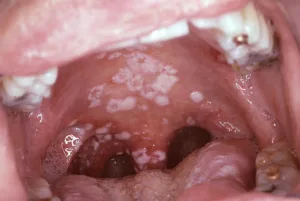
Candida is a yeast that normally lives in the mouth, gut, skin and vagina without causing trouble. Problems happen when it grows out of balance or gets into places it shouldn’t be. Symptoms depend on where that happens, and many of them overlap with other conditions, so they’re a reason to get checked, not a diagnosis on their own.
Table of Contents
ToggleWell-recognized candida infections
- Oral thrush: white patches on the tongue or inner cheeks that may wipe off and leave redness, soreness, or a cotton-mouth feeling. See what candida on the tongue looks like.
- Vaginal yeast infection: itching, burning, redness and thick white discharge.
- Skin infections: red, itchy rashes in warm skin folds (under the breasts, groin, armpits), often with small “satellite” spots. See what candida looks like on skin.
- Nail and nail-fold infections: redness and swelling around the nail, or thickened nails.
- Esophageal candidiasis: pain or difficulty swallowing. This needs medical care.
Symptoms often linked to gut overgrowth
People who suspect intestinal candida overgrowth often report bloating, gas, changes in bowel habits, sugar cravings, fatigue and brain fog. Scientific evidence connecting these symptoms to candida in otherwise healthy people is limited, and the same symptoms are common with IBS, SIBO, food intolerances, thyroid problems, anemia, stress and poor sleep. Read more on bloating, fatigue and candida vs. SIBO.
Who is more at risk
Recent antibiotics, diabetes, steroid or immune-suppressing medicines, dentures, pregnancy and a weakened immune system all raise the risk of candida infections.
Getting answers
A clinician can confirm thrush, skin or vaginal infections with an exam and simple tests. For gut symptoms, ask about a broader workup rather than relying only on online quizzes. Our pages on candida testing and at-home tests explain what different tests can and can’t tell you.
When to see a doctor right away
Get prompt care for trouble swallowing, fever, a weakened immune system with new symptoms, symptoms in a newborn, or any infection that keeps coming back. Invasive candida infections of the blood or organs are serious and are treated in hospital.
This article is general education, not medical advice. Talk to your doctor or another qualified clinician before changing your diet, starting supplements, or if your symptoms are severe, new, or not improving.
Free: Candida Diet Starter Guide
Get our printable foods-to-eat and foods-to-avoid lists plus a simple 7-day sample meal plan. Free, and you can unsubscribe anytime.